Friday, March 22, 2019
Contrarians Combine As Canadian Titan Brookfield Buys Credit Heavyweight Oaktree Capital

Tuesday, March 19, 2019
Top 10 Heal Care Stocks To Own For 2019
If your portfolio doesn't have any exposure to renewable energy, then you may want to start thinking of that as a shortcoming. Why?
The United States sourced at least 15% of its electricity from hydroelectric dams, wind farms, and solar arrays in 2018. The growing trend will become undeniable in the next decade. This year wind power will topple hydropower as the nation's leading renewable energy source -- a title that had been held for over 100 years. Meanwhile, battery prices are falling at such a precipitous rate many projections call for solar energy to eventually eclipse both of its renewable peers. In fact, the U.S. Department of Energy thinks that could happen sometime around 2030 when the country is expected to lean on wind and solar alone for as much as 30% of its electricity.
Then again, most long-term projections have proven to underestimate the growth of wind and solar. The point is that growth-minded investors may want to begin searching for profitable businesses in renewable energy to own for the long haul. NextEra Energy Partners (NYSE:NEP) and Brookfield Renewable Partners (NYSE:BEP) are good places to start, especially considering both stocks are being disrespected by Wall Street at the moment.
Top 10 Heal Care Stocks To Own For 2019: Civeo Corporation(CVEO)
Advisors' Opinion:- [By Steve Symington]
Still, several individual companies easily outran the broader market. Read on to learn why shares of ManTech International (NASDAQ:MANT), Civeo (NYSE:CVEO), and Deutsche Bank (NYSE:DB) each climbed higher today.
- [By Lisa Levin]
Check out these big penny stock gainers and losers
Losers World Fuel Services Corporation (NYSE: INT) tumbled 18 percent to $22.90 following Q1 results. Biglari Holdings Inc. (NYSE: BH) fell 17.4 percent to $349.52. Washington Prime Group will replace Biglari Holdings in the S&P SmallCap 600 on Tuesday, May 1. Flex Ltd. (NASDAQ: FLEX) dipped 15.7 percent to $14.03 after a mixed fourth quarter report. FormFactor, Inc. (NASDAQ: FORM) fell 15.3 percent to $11.65. FormFactor is expected to release Q1 results on May 2. Data I/O Corporation (NASDAQ: DAIO) dropped 14.3 percent to $6.24 following Q1 results. National Instruments Corporation (NASDAQ: NATI) fell 14.3 percent to $ 42.34 after reporting Q1 results. United States Steel Corporation (NYSE: X) dipped 14.2 percent to $32.37 following Q1 results. Civeo Corporation (NYSE: CVEO) dropped 13.5 percent to $3.33. Civeo posted a Q1 loss of $0.42 per share on sales of $101.504 million. athenahealth, Inc. (NASDAQ: ATHN) fell 12.4 percent to $125.310 after reporting Q1 results. Charter Communications, Inc. (NASDAQ: CHTR) shares tumbled 12.1 percent to $262.06 as the company posted Q1 results. Value Line, Inc. (NASDAQ: VALU) fell 11.3 percent to $19.10. Federated Investors, Inc. (NYSE: FII) shares dropped 11.2 percent to $27.605 after the company posted downbeat quarterly earnings. AV Homes, Inc. (NASDAQ: AVHI) declined 10.7 percent to $17.20 following Q1 results. CalAmp Corp. (NASDAQ: CAMP) dropped 9.4 percent to $21.01 after reporting Q4 results. Tandem Diabetes Care, Inc. (NASDAQ: TNDM) shares fell 8.9 percent to $7.280 following mixed Q1 results. Sony Corporation (NYSE: SNE) shares fell 8.4 percent to $45.97 after reporting Q4 results. LogMeIn Inc (NASDAQ: LOGM) fell 8.2 percent to $109.825. LogMeIn reported upbeat earnings for its first quarter, but issued weak second quarter and FY18 earning guidance. Eleven Biotherapeutics, Inc. (NASDAQ: EBIO - [By Logan Wallace]
Civeo Corp (NYSE:CVEO)’s share price was up 5.8% during trading on Tuesday . The stock traded as high as $3.53 and last traded at $3.48. Approximately 766,001 shares changed hands during mid-day trading, an increase of 1% from the average daily volume of 754,849 shares. The stock had previously closed at $3.29.
- [By Shane Hupp]
Civeo (NYSE:CVEO) was downgraded by research analysts at ValuEngine from a “buy” rating to a “hold” rating in a note issued to investors on Monday.
Top 10 Heal Care Stocks To Own For 2019: Nam Tai Property Inc.(NTP)
Advisors' Opinion:- [By Ethan Ryder]
News coverage about Nam Tai Property (NYSE:NTP) has trended somewhat positive recently, according to Accern. Accern rates the sentiment of media coverage by reviewing more than 20 million news and blog sources in real-time. Accern ranks coverage of companies on a scale of -1 to 1, with scores closest to one being the most favorable. Nam Tai Property earned a news impact score of 0.20 on Accern’s scale. Accern also gave news coverage about the electronics maker an impact score of 47.3059674665332 out of 100, indicating that recent media coverage is somewhat unlikely to have an effect on the company’s share price in the next few days.
Top 10 Heal Care Stocks To Own For 2019: Catalent, Inc.(CTLT)
Advisors' Opinion:- [By Max Byerly]
Catalent (NYSE:CTLT) SVP Steven L. Fasman sold 2,252 shares of the firm’s stock in a transaction on Wednesday, June 20th. The shares were sold at an average price of $41.78, for a total transaction of $94,088.56. The transaction was disclosed in a filing with the Securities & Exchange Commission, which is available through this hyperlink.
- [By Joseph Griffin]
Get a free copy of the Zacks research report on Catalent (CTLT)
For more information about research offerings from Zacks Investment Research, visit Zacks.com
- [By Max Byerly]
Get a free copy of the Zacks research report on Catalent (CTLT)
For more information about research offerings from Zacks Investment Research, visit Zacks.com
- [By Logan Wallace]
Catalent Inc (NYSE:CTLT) – Investment analysts at Piper Jaffray Companies reduced their Q2 2019 earnings per share (EPS) estimates for Catalent in a research note issued on Tuesday, August 28th. Piper Jaffray Companies analyst S. Wieland now anticipates that the company will post earnings of $0.36 per share for the quarter, down from their prior forecast of $0.42. Piper Jaffray Companies also issued estimates for Catalent’s Q3 2019 earnings at $0.40 EPS, Q4 2019 earnings at $0.68 EPS and FY2019 earnings at $1.71 EPS.
- [By Motley Fool Transcribers]
Catalent Inc (NYSE:CTLT)Q2 2019 Earnings Conference CallFeb. 05, 2019, 8:15 a.m. ET
Contents: Prepared Remarks Questions and Answers Call Participants Prepared Remarks:Operator
Top 10 Heal Care Stocks To Own For 2019: Eaton Vance Limited Duration Income Fund(EVV)
Advisors' Opinion:- [By Logan Wallace]
Eaton Vance Ltd Duration Income Fund (NYSEAMERICAN:EVV) was the recipient of a large increase in short interest in September. As of September 14th, there was short interest totalling 61,700 shares, an increase of 154.4% from the August 31st total of 24,249 shares. Currently, 0.1% of the company’s shares are short sold. Based on an average trading volume of 199,358 shares, the short-interest ratio is currently 0.3 days.
Top 10 Heal Care Stocks To Own For 2019: Scudder Municiple Income Trust(KTF)
Advisors' Opinion:- [By Stephan Byrd]
Fiera Capital Corp raised its holdings in shares of Deutsche Municipal Income Trust (NYSE:KTF) by 46.0% in the second quarter, according to the company in its most recent filing with the Securities & Exchange Commission. The institutional investor owned 353,686 shares of the investment management company’s stock after purchasing an additional 111,410 shares during the quarter. Fiera Capital Corp’s holdings in Deutsche Municipal Income Trust were worth $3,898,000 at the end of the most recent quarter.
- [By Shane Hupp]
TRADEMARK VIOLATION NOTICE: “DWS Municipal Income Trust (KTF) Plans $0.04 Monthly Dividend” was posted by Ticker Report and is owned by of Ticker Report. If you are viewing this story on another site, it was copied illegally and republished in violation of US and international trademark & copyright law. The correct version of this story can be read at https://www.tickerreport.com/banking-finance/4150549/dws-municipal-income-trust-ktf-plans-0-04-monthly-dividend.html.
Top 10 Heal Care Stocks To Own For 2019: Kamada Ltd.(KMDA)
Advisors' Opinion:- [By Garrett Baldwin] Retail stocks are in focus after the U.S. Census Bureau released monthly sales figures before the bell Tuesday. The bureau said that retail sales increased by 0.3% in April, a figure that matched trade expectations. Markets had expected consumer spending to increase, however home improvement sales were not the major factor that most expected. This was evident from The Home Depot's earnings report. Markets are increasingly optimistic over U.S. trade negotiations with China. Chinese President Xi Jinping's No. 1 economic advisor will visit the United States this week to continue the nation's dialogue with America. In addition, roughly 100 companies and trade associations will be sounding off to the Trump administration about the potential impact of tariffs in the Chinese markets. Stocks to Watch Today: TSLA, AMZN, GS Amazon.com Inc. (Nasdaq: AMZN) is in focus thanks to tax policy in Seattle. On Monday, the Seattle's City Council passed a bill that will tax Amazon and 131 other companies $275 per employee each year in order to create a fund to address homelessness in the Seattle. The tax is half what was originally proposed and remains a contentious issue for Amazon, which is the city's biggest employer. Goldman Sachs Group (NYSE: GS) is sounding the alarm about the state of the markets. The company warned that the U.S. budget deficit is increasing while America's unemployment rate is falling. This hasn't occurred since the World War II. The bank believes that the combination of the two could cause the Fed to spike interest rates in the near future. This comes at a time when the Fed has already lost control of interest rates. Look for additional earnings reports from Eagle Materials Inc. (NYSE: EXP), Bitauto Holding Ltd. (Nasdaq: BITA), Virtusa Corp. (Nasdaq: VRTU), Global Eagle Entertainment Inc. (Nasdaq: ENT), and Kamada Ltd. (Nasdaq: KMDA).
Follow Money Morning on Facebook, Twitter, and LinkedIn.
- [By Joseph Griffin]
Get a free copy of the Zacks research report on Kamada (KMDA)
For more information about research offerings from Zacks Investment Research, visit Zacks.com
- [By Stephan Byrd]
Shares of Kamada Ltd. (NASDAQ:KMDA) have been given an average rating of “Buy” by the six analysts that are presently covering the firm, Marketbeat Ratings reports. Two analysts have rated the stock with a hold recommendation and three have issued a buy recommendation on the company. The average 1 year target price among brokerages that have updated their coverage on the stock in the last year is $8.33.
- [By Lisa Levin]
Kamada Ltd. (NASDAQ: KMDA) is expected to report quarterly earnings at $0.02 per share on revenue of $24.02 million.
Concordia International Corp. (NASDAQ: CXRX) is estimated to report quarterly earnings at $0.06 per share on revenue of $143.80 million.
- [By Ethan Ryder]
Kamada Ltd. (NASDAQ:KMDA) – Stock analysts at Jefferies Group dropped their FY2020 earnings estimates for shares of Kamada in a research report issued on Tuesday, May 15th. Jefferies Group analyst R. Denhoy now anticipates that the biotechnology company will earn $0.61 per share for the year, down from their previous forecast of $0.62. Jefferies Group also issued estimates for Kamada’s FY2021 earnings at $0.36 EPS.
Top 10 Heal Care Stocks To Own For 2019: QuinStreet, Inc.(QNST)
Advisors' Opinion:- [By Ethan Ryder]
QuinStreet Inc (NASDAQ:QNST) has been given a consensus rating of “Buy” by the nine brokerages that are currently covering the company, MarketBeat.com reports. One research analyst has rated the stock with a hold recommendation and six have issued a buy recommendation on the company. The average 1-year price target among brokerages that have issued ratings on the stock in the last year is $17.29.
- [By Joseph Griffin]
Get a free copy of the Zacks research report on QuinStreet (QNST)
For more information about research offerings from Zacks Investment Research, visit Zacks.com
- [By Joseph Griffin]
Parisi Gray Wealth Management bought a new stake in shares of QuinStreet Inc (NASDAQ:QNST) in the 4th quarter, HoldingsChannel reports. The institutional investor bought 2,932 shares of the technology company’s stock, valued at approximately $47,000.
- [By Ethan Ryder]
QuinStreet Inc (NASDAQ:QNST) saw strong trading volume on Friday . 1,534,725 shares were traded during mid-day trading, an increase of 131% from the previous session’s volume of 665,429 shares.The stock last traded at $13.79 and had previously closed at $13.59.
Top 10 Heal Care Stocks To Own For 2019: Extreme Networks Inc.(EXTR)
Advisors' Opinion:- [By Anders Bylund]
Shares of network equipment maker Extreme Networks (NASDAQ:EXTR) are having a rough Wednesday. The stock opened 26.8% lower today, following last night's release of disappointing third-quarter results.
- [By Joseph Griffin]
Extreme Networks (NASDAQ:EXTR) posted its earnings results on Wednesday. The technology company reported $0.20 earnings per share (EPS) for the quarter, beating the consensus estimate of $0.19 by $0.01, Bloomberg Earnings reports. Extreme Networks had a positive return on equity of 43.61% and a negative net margin of 3.28%. The company had revenue of $278.30 million for the quarter, compared to analyst estimates of $279.22 million. During the same quarter in the previous year, the firm earned $0.17 earnings per share. The firm’s quarterly revenue was up 55.6% compared to the same quarter last year. Extreme Networks updated its Q1 guidance to $0.00-0.07 EPS.
- [By Ethan Ryder]
Usca Ria LLC acquired a new position in shares of Extreme Networks, Inc (NASDAQ:EXTR) in the 2nd quarter, according to the company in its most recent 13F filing with the SEC. The fund acquired 12,821 shares of the technology company’s stock, valued at approximately $102,000.
- [By Lisa Levin]
Some of the stocks that may grab investor focus today are:
Wall Street expects Booking Holdings Inc. (NASDAQ: BKNG) to post quarterly earnings at $10.67 per share on revenue of $2.87 billion after the closing bell. Booking Holdings shares gained 0.99 percent to $2,183.00 in after-hours trading. Tripadvisor Inc (NASDAQ: TRIP) reported stronger-than-expected results for its first quarter on Tuesday. Tripadvisor shares climbed 20.55 percent to $46.75 in the after-hours trading session. Analysts are expecting Anheuser-Busch InBev SA/NV (NYSE: BUD) to have earned $0.89 per share on revenue of $13.06 billion in the latest quarter. Anheuser-Busch will release earnings before the markets open. Anheuser-Busch shares gained 0.77 percent to $99.00 in after-hours trading. Extreme Networks, Inc (NASDAQ: EXTR) reported downbeat earnings for its third quarter and issued weak Q4 guidance. Extreme Networks shares fell 28.51 percent to $8.40 in the after-hours trading session. Before the opening bell, Ameren Corporation (NYSE: AEE) is projected to report quarterly earnings at $0.57 per share on revenue of $1.55 billion. Ameren shares dropped 2.78 percent to close at $56.91 on Tuesday.Find out what's going on in today's market and bring any questions you have to Benzinga's PreMarket Prep.
Top 10 Heal Care Stocks To Own For 2019: Vanda Pharmaceuticals Inc.(VNDA)
Advisors' Opinion:- [By Shane Hupp]
Get a free copy of the Zacks research report on Vanda Pharmaceuticals (VNDA)
For more information about research offerings from Zacks Investment Research, visit Zacks.com
- [By Max Byerly]
Vanda Pharmaceuticals Inc. (NASDAQ:VNDA)’s share price traded up 9.2% during mid-day trading on Thursday following a better than expected earnings announcement. The company traded as high as $20.47 and last traded at $20.12. 2,452,372 shares changed hands during mid-day trading, an increase of 134% from the average session volume of 1,049,783 shares. The stock had previously closed at $18.42.
- [By Max Byerly]
Get a free copy of the Zacks research report on Vanda Pharmaceuticals (VNDA)
For more information about research offerings from Zacks Investment Research, visit Zacks.com
- [By Maxx Chatsko, Chris Neiger, and Neha Chamaria]
That's a great example to make investors rethink where they're looking for growth stocks. We recently asked three Motley Fool contributors for their top growth investments right now. Here's why they chose Vanda Pharmaceuticals (NASDAQ:VNDA), XPO Logistics (NYSE:XPO), and HubSpot (NYSE:HUBS).
Top 10 Heal Care Stocks To Own For 2019: Six Flags Entertainment Corporation New(SIX)
Advisors' Opinion:- [By Joseph Griffin]
Get a free copy of the Zacks research report on Six Flags Entertainment (SIX)
For more information about research offerings from Zacks Investment Research, visit Zacks.com
- [By Rick Munarriz]
Haunted mazes, scare zones, and a safe but sinister vibe have helped players prop up their financials during the fourth quarter, which has been a sleepy period in the past. It's not a surprise that Six Flags (NYSE:SIX) has posted more revenue growth in the fourth quarter than it has for the entire year in recent years.
- [By Lisa Levin] Gainers Daré Bioscience, Inc. (NASDAQ: DARE) shares climbed 54.2 percent to $1.25 on news that the company entered into worldwide license agreement for Juniper Pharmaceuticals' intravaginal ring technology platform. Travelzoo (NASDAQ: TZOO) climbed 21.3 percent to $9.40 following strong Q1 results. Intrepid Potash, Inc. (NYSE: IPI) gained 16.5 percent to $4.60. K12 Inc. (NYSE: LRN) shares rose 11.2 percent to $15.4206 following Q3 results. Chicago Bridge & Iron Company N.V. (NYSE: CBI) shares rose 11 percent to $15.3289. McDermott issued a release reiterating rejection of Subsea 7's offer. Six Flags Entertainment Corporation (NYSE: SIX) shares gained 9.2 percent to $64.61 as the company posted a narrower-than-expected loss for its first quarter. Tupperware Brands Corporation (NYSE: TUP) surged 8.5 percent to $46.00 as the company posted in-line quarterly earnings. Carlisle Companies Incorporated (NYSE: CSL) climbed 7.5 percent to $107.22 after reporting Q1 results. Allena Pharmaceuticals, Inc. (NASDAQ: ALNA) rose 6.1 percent to $14.78. B. Riley initiated coverage on Allena Pharmaceuticals with a Buy rating. Texas Instruments Incorporated (NASDAQ: TXN) rose 4.6 percent to $102.90 after the company reported stronger-than-expected earnings for its first quarter on Tuesday. Credit Suisse Group AG (NYSE: CS) rose 4.5 percent to $17.03 following strong Q1 results. STMicroelectronics N.V. (NYSE: STM) rose 4.2 percent to $22.20 after reporting Q1 results.
Check out these big penny stock gainers and losers
- [By Steve Symington]
Shares of Six Flags Entertainment Corp. (NYSE:SIX) were up 8.8% as of 2 p.m. EDT Wednesday after the theme park operator announced better-than-expected first-quarter 2018 results.
- [By Dan Caplinger]
Stocks rebounded on Wednesday, with the Dow Jones Industrial Average climbing back from triple-digit losses early in the session to finish with a modest gain. Market participants were initially nervous because of the continued upward pressure on interest rates and their potential negative impact on the U.S. economy. But later in the day, confidence returned, and the steadfast market reversed course. Several individual stocks had much larger advances. Norfolk Southern (NYSE:NSC), Six Flags Entertainment (NYSE:SIX), and Intrepid Potash (NYSE:IPI) were among the best performers on the day. Here's why they did so well.
Sunday, March 17, 2019
Growth stocks set to rally this year, market watcher says
The S&P 500 has raced higher this quarter and one group of stocks has done the heavy lifting.
Growth stocks, prized for high sales and profit potential, have led the market higher since the December bottom.
Lindsey Bell, investment strategist at CFRA Research, said this is just the beginning of a bigger trend.
"Growth is going to continue to lead as [economic] growth picks up as the year carries on and I think that's because you've seen these stocks hit down a lot worse than some of the other areas of the market so they have a lot further to go from there," Bell said Thursday on CNBC's "Trading Nation."
Stocks with high-growth potential, such as the tech names, typically get a bid when the economy is strong as investors are more willing to pay a higher price for a bigger payoff. During a downturn, investors tend to hide out in value stocks which have lower valuations and more consistent profits.
As fears of an economic slowdown rose over the fourth quarter, both value and growth stocks were punished; the IVE value ETF plummeted 13 percent, while the IVW growth ETF saw a sharper 15 percent decline.
A low bar for earnings after the December sell-off could also be a catalyst for growth stocks, according to Bell.
"Earnings numbers have been cut drastically for these guys, way more than the S&P 500, way more than the value stocks so I think there just lies opportunity there when we do get that economic growth back," said Bell.
The Street anticipates earnings for growth stocks to fall by 0.6 percent this year, said Bell, far worse than initial expectations for an increase of 7.6 percent. By comparison, value earnings growth was reduced to 4.4 percent growth from 7.5 percent.
While money has flowed back into growth stocks after December's sell-off, Bell fears some investors may have been left out. ETF funds, a passive investment vehicle often used by individual investors, have shown flows into value indexes over growth since mid-2018.
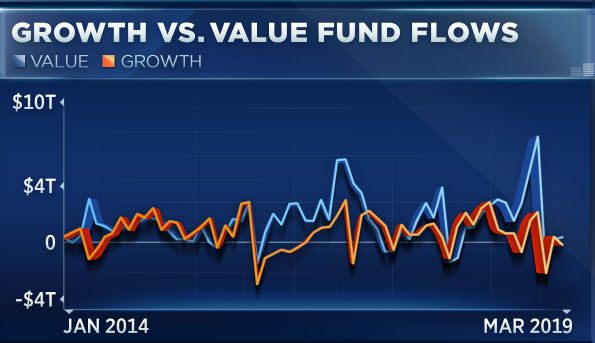
"They're getting a little more nervous," Bell said of investor sentiment. "It's the later stages of this business cycle, we're in the 10th year of the bull market and they're just being a little more cautious with the uncertainties that still remain out there."
However, even if a recession was on the horizon, historical returns suggest growth stocks still deliver.
"Investors should consider the growth area of the spectrum because what you typically see over time is in the six months before, during and after a bear market or correction growth typically leads," said Bell.
During the last correction from May 2015 to February 2016, the S&P 500 declined by 14 percent. Over the next six months, the IVW growth ETF rallied 19 percent.
DisclaimerSaturday, March 16, 2019
Why Snap Stock Jumped Today
Shares of Snap (NYSE:SNAP) have jumped today, up by 11% as of 11:30 a.m. EDT, after the company received an upgrade from BTIG Research. Analyst Rich Greenfield has been a vocal skeptic of the Snapchat parent's turnaround prospects but is now changing his tune.
So whatBTIG had previously cut its rating on Snap to sell back in September, and then moved to the sidelines with a neutral rating in December. Greenfield is now boosting his rating to a buy with a $15 price target, despite noting that "virtually everything that could go wrong for Snapchat over the past couple years since going public has gone wrong." However, the analyst is encouraged that there has been a noticeable uptick in spending in North America by advertisers based in emerging markets, potentially taking advantage of low ad prices.

Image source: Snap.
There has also been a noticeable improvement in the quality of ads in Snapchat's Discover section, with a "meaningful reduction in clickbait/seedy influencer content and an increase in premium/publisher content," according to Greenfield. Snapchat remains incredibly popular with core users who use the platform for communications, and Snapchat still has potential to expand internationally. The company's progress in improving the app's performance on Android is also a welcome sign.
Now whatBTIG still has some reservations, most notably the investigations by the U.S. Department of Justice and the SEC over IPO disclosures. The outcome of those investigations could hurt Snap's cash position.
Greenfield has adjusted his estimates, and now expects negative free cash flow of just $510 million. He no longer believes that Snap will need to raise capital in 2020. The analyst is now modeling for 2019 revenue of $1.65 billion, up from a prior estimate of $1.4 billion. Looking farther out, Greenfield expects 2022 revenue to be $3.4 billion, up from a prior estimate of $2.1 billion.
Friday, March 15, 2019
Polar Capital LLP Has $67.97 Million Stake in Suncor Energy Inc. (SU)
 Polar Capital LLP lessened its stake in shares of Suncor Energy Inc. (NYSE:SU) (TSE:SU) by 21.3% in the fourth quarter, according to the company in its most recent Form 13F filing with the SEC. The firm owned 1,998,048 shares of the oil and gas producer’s stock after selling 541,874 shares during the quarter. Polar Capital LLP owned approximately 0.13% of Suncor Energy worth $67,965,000 at the end of the most recent quarter.
Several other large investors also recently added to or reduced their stakes in SU. First Manhattan Co. lifted its stake in Suncor Energy by 64.8% in the fourth quarter. First Manhattan Co. now owns 37,782 shares of the oil and gas producer’s stock worth $1,056,000 after acquiring an additional 14,856 shares during the period. Captrust Financial Advisors increased its holdings in shares of Suncor Energy by 184.4% during the third quarter. Captrust Financial Advisors now owns 17,626 shares of the oil and gas producer’s stock valued at $682,000 after acquiring an additional 11,429 shares in the last quarter. Marshall Wace LLP bought a new position in shares of Suncor Energy during the third quarter valued at $1,576,000. Morgan Stanley increased its holdings in shares of Suncor Energy by 23.1% during the third quarter. Morgan Stanley now owns 3,400,893 shares of the oil and gas producer’s stock valued at $131,579,000 after acquiring an additional 637,520 shares in the last quarter. Finally, Legacy Bridge LLC bought a new position in shares of Suncor Energy during the fourth quarter valued at $27,000. 66.63% of the stock is owned by hedge funds and other institutional investors.
Get Suncor Energy alerts:Several equities analysts have recently weighed in on SU shares. Zacks Investment Research restated a “hold” rating on shares of Suncor Energy in a report on Friday, November 16th. Canaccord Genuity set a $65.00 price target on Suncor Energy and gave the company a “buy” rating in a report on Tuesday, November 20th. Mizuho restated an “average” rating and set a $52.00 price target on shares of Suncor Energy in a report on Monday, December 3rd. Macquarie downgraded Suncor Energy from an “outperform” rating to a “neutral” rating and set a $46.00 price target for the company. in a report on Tuesday, December 4th. Finally, GMP Securities downgraded Suncor Energy from a “buy” rating to a “hold” rating in a report on Thursday, December 13th. One analyst has rated the stock with a sell rating, five have given a hold rating and eleven have assigned a buy rating to the stock. The stock currently has an average rating of “Buy” and a consensus target price of $49.12.
NYSE SU opened at $33.46 on Wednesday. Suncor Energy Inc. has a one year low of $25.81 and a one year high of $42.55. The stock has a market capitalization of $53.03 billion, a P/E ratio of 16.73, a price-to-earnings-growth ratio of 2.04 and a beta of 1.14. The company has a quick ratio of 0.54, a current ratio of 0.84 and a debt-to-equity ratio of 0.32.
Suncor Energy (NYSE:SU) (TSE:SU) last released its quarterly earnings data on Tuesday, February 5th. The oil and gas producer reported $0.27 EPS for the quarter, missing the consensus estimate of $0.38 by ($0.11). Suncor Energy had a return on equity of 9.50% and a net margin of 8.48%. The business had revenue of $6.77 billion during the quarter, compared to the consensus estimate of $8.13 billion. On average, sell-side analysts expect that Suncor Energy Inc. will post 1.83 EPS for the current year.
The firm also recently disclosed a quarterly dividend, which will be paid on Monday, March 25th. Investors of record on Monday, March 4th will be issued a $0.32 dividend. This represents a $1.28 annualized dividend and a yield of 3.83%. This is an increase from Suncor Energy’s previous quarterly dividend of $0.27. The ex-dividend date of this dividend is Friday, March 1st. Suncor Energy’s dividend payout ratio (DPR) is presently 54.00%.
TRADEMARK VIOLATION NOTICE: “Polar Capital LLP Has $67.97 Million Stake in Suncor Energy Inc. (SU)” was first reported by Ticker Report and is the sole property of of Ticker Report. If you are reading this report on another website, it was copied illegally and reposted in violation of US & international trademark & copyright laws. The correct version of this report can be read at https://www.tickerreport.com/banking-finance/4218874/polar-capital-llp-has-67-97-million-stake-in-suncor-energy-inc-su.html.
Suncor Energy Profile
Suncor Energy Inc operates as an integrated energy company. The company primarily focuses on developing petroleum resource basins in Canada's Athabasca oil sands; explores, acquires, develops, produces, and markets crude oil and natural gas in Canada and internationally; transports and refines crude oil; markets petroleum and petrochemical products primarily in Canada.
See Also: What are different types of coverage ratios?
Want to see what other hedge funds are holding SU? Visit HoldingsChannel.com to get the latest 13F filings and insider trades for Suncor Energy Inc. (NYSE:SU) (TSE:SU).
Thursday, March 14, 2019
BioSig Technologies Inc (BSGM) Given Average Recommendation of “Strong Buy” by Analysts
 Shares of BioSig Technologies Inc (NASDAQ:BSGM) have earned an average broker rating score of 1.00 (Strong Buy) from the one brokers that provide coverage for the stock, Zacks Investment Research reports. One equities research analyst has rated the stock with a strong buy rating.
Analysts have set a 12 month consensus target price of $11.88 for the company, according to Zacks. Zacks has also assigned BioSig Technologies an industry rank of 70 out of 255 based on the ratings given to its competitors.
Get BioSig Technologies alerts:Several analysts have issued reports on BSGM shares. Laidlaw set a $11.00 price objective on shares of BioSig Technologies and gave the company a “buy” rating in a research report on Wednesday, February 20th. Roth Capital began coverage on shares of BioSig Technologies in a research report on Thursday, December 6th. They set a “buy” rating and a $14.00 price target for the company. Finally, Zacks Investment Research downgraded shares of BioSig Technologies from a “buy” rating to a “hold” rating in a research report on Monday, November 19th.
NASDAQ:BSGM traded up $0.04 during trading hours on Tuesday, hitting $5.55. The stock had a trading volume of 15,928 shares, compared to its average volume of 52,062. BioSig Technologies has a 1-year low of $3.38 and a 1-year high of $7.88.
In related news, CEO Kenneth L. Londoner bought 8,500 shares of the business’s stock in a transaction on Thursday, January 10th. The shares were bought at an average cost of $4.38 per share, for a total transaction of $37,230.00. The transaction was disclosed in a document filed with the Securities & Exchange Commission, which is accessible through this hyperlink. Also, CEO Kenneth L. Londoner bought 18,700 shares of the business’s stock in a transaction on Tuesday, January 22nd. The stock was bought at an average price of $4.35 per share, for a total transaction of $81,345.00. The disclosure for this purchase can be found here. 26.70% of the stock is currently owned by company insiders.
A hedge fund recently bought a new stake in BioSig Technologies stock. Millennium Management LLC bought a new position in shares of BioSig Technologies Inc (NASDAQ:BSGM) during the fourth quarter, according to its most recent disclosure with the Securities and Exchange Commission (SEC). The fund bought 156,822 shares of the company’s stock, valued at approximately $670,000. Millennium Management LLC owned 0.94% of BioSig Technologies as of its most recent SEC filing. 2.15% of the stock is owned by institutional investors.
About BioSig Technologies
BioSig Technologies, Inc, a development stage medical device company, engages in developing a proprietary biomedical signal processing technology platform to extract information from physiologic signals. Its product is PURE (Precise Uninterrupted Real-time evaluation of Electrograms) EP System, a surface electrocardiogram and intracardiac multichannel recording and analysis system that acquires, processes, and displays electrocardiogram and electrograms required during electrophysiology studies and catheter ablation procedures.
Read More: How Important is Technical Analysis of Stocks
Get a free copy of the Zacks research report on BioSig Technologies (BSGM)
For more information about research offerings from Zacks Investment Research, visit Zacks.com
Tuesday, March 12, 2019
BlackRock Inc. Acquires 21,077 Shares of Korn Ferry (KFY)
 BlackRock Inc. grew its holdings in shares of Korn Ferry (NYSE:KFY) by 0.2% during the fourth quarter, according to its most recent filing with the Securities and Exchange Commission. The institutional investor owned 8,602,101 shares of the business services provider’s stock after purchasing an additional 21,077 shares during the quarter. BlackRock Inc. owned about 0.15% of Korn Ferry worth $340,126,000 as of its most recent filing with the Securities and Exchange Commission.
Several other institutional investors have also added to or reduced their stakes in the company. California Public Employees Retirement System grew its position in Korn Ferry by 34.1% in the 4th quarter. California Public Employees Retirement System now owns 146,810 shares of the business services provider’s stock worth $5,805,000 after purchasing an additional 37,325 shares during the last quarter. Seizert Capital Partners LLC boosted its position in shares of Korn Ferry by 43.7% during the 4th quarter. Seizert Capital Partners LLC now owns 44,578 shares of the business services provider’s stock valued at $1,763,000 after acquiring an additional 13,565 shares in the last quarter. 361 Capital LLC boosted its position in shares of Korn Ferry by 70.7% during the 4th quarter. 361 Capital LLC now owns 49,212 shares of the business services provider’s stock valued at $1,946,000 after acquiring an additional 20,380 shares in the last quarter. Beacon Investment Advisory Services Inc. acquired a new stake in shares of Korn Ferry during the 4th quarter valued at about $206,000. Finally, PNC Financial Services Group Inc. boosted its position in shares of Korn Ferry by 22.5% during the 4th quarter. PNC Financial Services Group Inc. now owns 6,066 shares of the business services provider’s stock valued at $240,000 after acquiring an additional 1,113 shares in the last quarter. Institutional investors and hedge funds own 92.15% of the company’s stock.
Get Korn Ferry alerts:Several brokerages have recently weighed in on KFY. ValuEngine upgraded shares of Korn Ferry from a “sell” rating to a “hold” rating in a research report on Wednesday, January 2nd. Zacks Investment Research upgraded shares of Korn Ferry from a “hold” rating to a “buy” rating and set a $50.00 target price on the stock in a research report on Saturday, December 8th. Credit Suisse Group decreased their target price on shares of Korn Ferry from $44.00 to $40.00 and set an “underperform” rating on the stock in a research report on Friday, December 7th. SunTrust Banks decreased their target price on shares of Korn Ferry to $63.00 and set a “buy” rating on the stock in a research report on Friday, December 7th. Finally, TheStreet upgraded shares of Korn Ferry from a “c” rating to a “b” rating in a research report on Friday, December 7th. One equities research analyst has rated the stock with a sell rating, two have given a hold rating and three have assigned a buy rating to the company. Korn Ferry has a consensus rating of “Hold” and an average target price of $58.25.
Shares of KFY stock opened at $46.45 on Tuesday. Korn Ferry has a 12-month low of $37.38 and a 12-month high of $68.98. The stock has a market cap of $2.53 billion, a P/E ratio of 17.08 and a beta of 1.31. The company has a quick ratio of 2.00, a current ratio of 2.00 and a debt-to-equity ratio of 0.17.
Korn Ferry (NYSE:KFY) last announced its quarterly earnings results on Thursday, March 7th. The business services provider reported $0.81 earnings per share (EPS) for the quarter, meeting the consensus estimate of $0.81. Korn Ferry had a net margin of 3.92% and a return on equity of 15.01%. The firm had revenue of $474.50 million during the quarter, compared to the consensus estimate of $481.98 million. During the same period last year, the firm posted $0.70 EPS. On average, equities research analysts expect that Korn Ferry will post 3.36 EPS for the current fiscal year.
The company also recently declared a quarterly dividend, which will be paid on Monday, April 15th. Investors of record on Tuesday, March 26th will be issued a dividend of $0.10 per share. This represents a $0.40 annualized dividend and a yield of 0.86%. The ex-dividend date of this dividend is Monday, March 25th. Korn Ferry’s dividend payout ratio is currently 14.71%.
TRADEMARK VIOLATION WARNING: This report was first posted by Ticker Report and is the property of of Ticker Report. If you are reading this report on another publication, it was stolen and reposted in violation of United States and international trademark and copyright law. The original version of this report can be viewed at https://www.tickerreport.com/banking-finance/4215057/blackrock-inc-acquires-21077-shares-of-korn-ferry-kfy.html.
Korn Ferry Company Profile
Korn/Ferry International engages in the provision of global organizational consulting firm. It operates through the following segments: Executive Search, Hay Group, Futurestep, and Corporate. The Executive Search segment helps clients attract and hire leaders who fit in with their organization, and make it stand out.
Read More: Stop Order Uses For Individual Investors
Want to see what other hedge funds are holding KFY? Visit HoldingsChannel.com to get the latest 13F filings and insider trades for Korn Ferry (NYSE:KFY).
A Foolish Take: The Bull Market Turns 10
Over the weekend, investors celebrated the 10th anniversary of the stock market's lowest point during the bear market of 2008-2009. The S&P 500 (SNPINDEX:^GSPC) and the Dow Jones Industrial Average (DJINDICES:^DJI) hit their lowest points on March 9, 2009, before mounting a decade-long bull market that sent shares to unprecedented levels.
The financial crisis that brought about the stock market's plunge stemmed from the end of the housing boom in the U.S. during the mid-2000s. With many banks having extended credit on dubious terms to mortgage borrowers, the big drop in housing prices in many key markets across the nation created problems for lenders. Even the largest financial institutions proved undercapitalized to withstand the pressures that the housing bust created, sending shock waves throughout the global financial system, and it took massive government bailouts to ensure that big banks would be able to make it through the toughest part of the crisis.
Since then, the stock market has seen strong returns, but they haven't been equally strong everywhere. As you can see below, various market measures have given investors very different returns.

Data source: YCharts. Note: Returns shown are total returns for exchange-traded funds tracking the markets indicated. EAFE = Europe, Australasia, and Far East. EM = emerging markets.
A few points are worth noting. First, international markets have dramatically underperformed U.S. stocks over the past decade, as many foreign economies have gone through their own regional crises of confidence. That's been evident both in developed markets in areas like Western Europe and in emerging markets across China, India, Brazil, and Russia.
Second, in the U.S., the Nasdaq has been the big winner, with gains far outpacing those of other benchmarks. That's due in large part to the surge in technology stocks, which have done better than the broader market and produced some of the biggest winners of the past decade.
Finally, it's interesting to see that the Dow's and S&P's returns are almost identical. There's been plenty of discussion over the years about how the Dow's old-fashioned price-weighted calculation makes it a misleading indicator of stock performance, but over the long haul, it's tracked market-cap-weighted measures like the S&P quite closely.
In the decade to come, it's unlikely that investors will see stock market returns that come close to matching the track record of past 10 years. But over the long run, the rise and fall of the stock market has produced returns that have helped millions reach their financial goals.
Monday, March 11, 2019
Why Estee Lauder Stock Jumped 15% Last Month
Shares of Estee Lauder (NYSE:EL) were rising last month after the cosmetics giant turned in a strong second-quarter earnings report. Like other beauty companies, Estee Lauder appears to be benefiting from surging sales in the prestige-beauty segment. According to data from S&P Global Market Intelligence, the stock finished February up 15%.
As the chart below shows, the bulk of the stock's gains in the month came at the beginning of February after the company reported earnings.

EL data by YCharts.
So whatEstee Lauder's stock rose 12% on Feb. 5 as the company announced second-quarter results, beating estimates on the top and bottom lines. A strong performance in China buoyed overall growth as constant-currency sales rose 20% in the Asia/Pacific region, and prestige beauty accelerated in China as the company gained share in that valuable market.

Image source: Getty Images.
Total revenue rose 7%, or 11% after adjusting for currency exchange and the new revenue recognition standard, to $4 billion, ahead of estimates of $3.92 billion. The company noted the strong growth of brands like Estee Lauder, La Mer, and MAC, and reported sales in the skin care category was up 18%.
With the help of a lower tax rate, adjusted earnings per share rose from $1.52 to $1.86, easily beating expectations of $1.54. CEO Fabrizio Freda said: "We delivered an excellent performance in our fiscal second quarter. Importantly, this was our eighth consecutive quarter of impressive net sales growth that met or exceeded our long-term goal, all while navigating many global macro issues."
Now whatEstee Lauder also lifted its full-year guidance for the year, calling for sales to increase 5% to 6%, up from a prior forecast of 4% to 5%. Excluding currency exchange and the new revenue recognition standard, the company sees revenue rising 8% to 9% for the year.
On the bottom line, it now expects adjusted earnings per share of between $4.92 and $5, up from a previous range of $4.73 to $4.82 and higher than the $4.51 it reported last year. With tailwinds in China, skin care, and overall prestige beauty, Estee Lauder looks poised to deliver more solid growth.
Saturday, March 9, 2019
Insider Selling: Paycom Software Inc (PAYC) CFO Sells 12,000 Shares of Stock
 Paycom Software Inc (NYSE:PAYC) CFO Craig E. Boelte sold 12,000 shares of the firm’s stock in a transaction dated Wednesday, March 6th. The stock was sold at an average price of $176.03, for a total value of $2,112,360.00. The transaction was disclosed in a legal filing with the Securities & Exchange Commission, which is accessible through the SEC website.
Craig E. Boelte also recently made the following trade(s):
Get Paycom Software alerts: On Wednesday, January 9th, Craig E. Boelte sold 12,000 shares of Paycom Software stock. The stock was sold at an average price of $128.78, for a total value of $1,545,360.00.Shares of NYSE:PAYC traded up $1.85 during mid-day trading on Friday, hitting $178.08. 481,080 shares of the company traded hands, compared to its average volume of 658,054. The company has a market cap of $10.33 billion, a P/E ratio of 81.69, a PEG ratio of 2.81 and a beta of 1.78. The company has a debt-to-equity ratio of 0.10, a quick ratio of 1.03 and a current ratio of 1.03. Paycom Software Inc has a 52-week low of $96.44 and a 52-week high of $186.00.
Paycom Software (NYSE:PAYC) last announced its earnings results on Tuesday, February 5th. The software maker reported $0.61 EPS for the quarter, beating the consensus estimate of $0.48 by $0.13. The business had revenue of $150.33 million for the quarter, compared to the consensus estimate of $144.10 million. Paycom Software had a return on equity of 38.83% and a net margin of 24.20%. The company’s revenue was up 31.8% on a year-over-year basis. During the same period last year, the business posted $0.90 EPS. Analysts predict that Paycom Software Inc will post 2.62 earnings per share for the current year.
Several large investors have recently made changes to their positions in PAYC. Vanguard Group Inc. grew its stake in Paycom Software by 2.2% during the 3rd quarter. Vanguard Group Inc. now owns 4,348,359 shares of the software maker’s stock valued at $675,778,000 after purchasing an additional 93,152 shares in the last quarter. Vanguard Group Inc grew its stake in Paycom Software by 2.2% during the 3rd quarter. Vanguard Group Inc now owns 4,348,359 shares of the software maker’s stock valued at $675,778,000 after purchasing an additional 93,152 shares in the last quarter. Capital International Investors acquired a new stake in Paycom Software during the 3rd quarter valued at approximately $488,601,000. BlackRock Inc. grew its stake in Paycom Software by 1.1% during the 4th quarter. BlackRock Inc. now owns 2,212,593 shares of the software maker’s stock valued at $270,933,000 after purchasing an additional 23,876 shares in the last quarter. Finally, Kayne Anderson Rudnick Investment Management LLC grew its stake in Paycom Software by 72.6% during the 4th quarter. Kayne Anderson Rudnick Investment Management LLC now owns 1,964,610 shares of the software maker’s stock valued at $240,566,000 after purchasing an additional 826,529 shares in the last quarter. Institutional investors and hedge funds own 79.35% of the company’s stock.
A number of equities analysts have recently commented on PAYC shares. Zacks Investment Research downgraded Paycom Software from a “buy” rating to a “hold” rating in a report on Wednesday, January 2nd. KeyCorp raised their price objective on Paycom Software from $133.00 to $182.00 and gave the stock an “overweight” rating in a report on Wednesday, February 6th. Royal Bank of Canada raised their price objective on Paycom Software to $139.00 and gave the stock a “market perform” rating in a report on Monday, February 4th. They noted that the move was a valuation call. Jefferies Financial Group raised their price objective on Paycom Software to $180.00 and gave the stock a “buy” rating in a report on Wednesday, February 6th. Finally, Canaccord Genuity raised their price objective on Paycom Software from $140.00 to $160.00 and gave the stock a “hold” rating in a report on Wednesday, February 6th. They noted that the move was a valuation call. Nine equities research analysts have rated the stock with a hold rating and seven have issued a buy rating to the stock. The company presently has a consensus rating of “Hold” and a consensus target price of $150.87.
WARNING: This piece of content was reported by Ticker Report and is the property of of Ticker Report. If you are accessing this piece of content on another domain, it was copied illegally and reposted in violation of US and international copyright and trademark legislation. The original version of this piece of content can be viewed at https://www.tickerreport.com/banking-finance/4207449/insider-selling-paycom-software-inc-payc-cfo-sells-12000-shares-of-stock.html.
Paycom Software Company Profile
Paycom Software, Inc provides cloud-based human capital management (HCM) software service for small to mid-sized companies in the United States. It provides functionality and data analytics that businesses need to manage the employment life cycle from recruitment to retirement. The company's HCM solution offers a suite of applications in the areas of talent acquisition, including applicant tracking, candidate tracker, background checks, on-boarding, e-verify, and tax credit services; and time and labor management, such as time and attendance, scheduling/schedule exchange, time-off requests, labor allocation, labor management reports/push reporting, and geofencing/geotracking.
Recommended Story: Trading Ex-Dividend Strategy
Catalyst Biosciences Inc (CBIO) Files 10-K for the Fiscal Year Ended on December 31, 2018
Catalyst Biosciences Inc (NASDAQ:CBIO) files its latest 10-K with SEC for the fiscal year ended on December 31, 2018. Catalyst Biosciences Inc is a clinical-stage biopharmaceutical company. The Company is engaged in creating and developing novel medicines to address serious medical conditions. Catalyst Biosciences Inc has a market cap of $93.880 million; its shares were traded at around $7.86 with and P/S ratio of 110.75. Catalyst Biosciences Inc had annual average EBITDA growth of 33.50% over the past five years.
For the latest fiscal year the company reported a revenue of $0.01 million, a decrease of 99.4% from the previous year. For the last five years Catalyst Biosciences Inc had an average revenue decline of 51.8% a year.The reported loss per diluted share was $2.68 for the year, compared with the loss per share of $269.849 in the previous year. The Catalyst Biosciences Inc had an operating margin of -563700%, compared with the operating margin of -2143.61% a year before. The 10-year historical median operating margin of Catalyst Biosciences Inc is -287.54%. The profitability rank of the company is 1 (out of 10).
At the end of the fiscal year, Catalyst Biosciences Inc has the cash and cash equivalents of $31.2 million, compared with $14.5 million in the previous year. The company had no long term debt. Catalyst Biosciences Inc has a financial strength rank of 8 (out of 10).
At the current stock price of $7.86, Catalyst Biosciences Inc is traded at 976.7% premium to its historical median P/S valuation band of $0.73. The P/S ratio of the stock is 110.75, while the historical median P/S ratio is 10.28. The stock lost 72.25% during the past 12 months.
For the complete 20-year historical financial data of CBIO, click here.
Friday, March 8, 2019
Buy AMC Shares If The Stock Dips
The last time I wrote about AMC Entertainment (AMC), I asked if the stock was a knife worth catching. Since then, the stock fell from $14.16 to as low as $11.66. But after the fourth quarter report, investors piled onto the stock. The company deserves the bullish buying thanks to stronger sequential results, but questions remain. Should the company pay a generous dividend when its balance sheet is burdened by debt? Will 2019 movie attendance add to revenue growth?
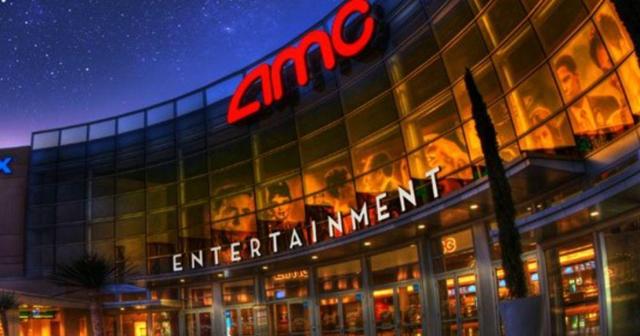
AMC benefited from strong movie title releases in 2018. Venom, Incredibles 2, Avengers: Infinity War and Black Panther led to strong movie attendance in the period. That the domestic entry box office reached a new all-time record of ~$12 billion will make this year's comparable results harder to match. Still, AMC's 6.1% attendance increase last year drove revenues to a record $5.5 billion. AMC's food and beverage revenue growth of 8% is a notable achievement because it lifted EBITDA by 13% Y/Y to $929.2 million last year.
Growth Drivers in 2019Theatre renovations will continue to drive revenue this year. In 2018, AMC enjoyed a return of above 25% with its recliner renovations. The response in Europe was even better, with returns of more than 50%.
AMC's mobile app and website benefited from higher online engagement. With online sales accounting for 45%, the company has room to derive even more sales from this channel. The operating cost model for online is likely better than offline and will add positively to 2019 EBITDA.
The AMC Stub A-List program continues to be of strategic importance, especially when Helios' (OTC:HMNY) MoviePass is not going away. The subscription helped AMC outpace sales in the industry domestically. The monthly prepaid subscription offering is incredibly successful because it launched just eight months ago. Stubs has 18.6 million member households. 45% of that clientele is using Stubs to track purchases at AMC and collecting the all-important loyalty points. AMC forecasts that it will send 1.5 billion e-mails and texts to Stub members.
AMC ended Q4 with 704,560 members on the A-List. Expect these members to add to AMC's profitability as moviegoers bring friends and family who pay full price, along with buying food and beverage at the theatres.
Strong Pricing PowerThanks to the demand inelasticity of the subscription, AMC raised membership prices by 13%. Investors may expect membership continuing to grow despite the price increase. Once again, because subscription moviegoers visit the theatre more often than non-members, AMC has the opportunity to grow overall attendance and make more profits from concession sales. A-List members spend around 2.5 times more on food and beverage compared to before signing up.
When AMC stock rallied to more than $16 following its fourth quarter report, investors may have become overly excited. Stubs A-List was EBITDA neutral to slightly positive in January and February. For every 1 million subscribers, AMC gets between $15 - $25 million in incremental adjusted EBITDA (annualized). The $11.6 million adjusted EBITDA in the second half of 2018 also is at the lower end of management's $10 - $15 million target. Despite subscription growth exceeding expectations but adding less than thought in 2018, AMC now forecasts A-List will add to EBITDA this year, one year ahead of schedule.
Subscription Model Key to Buying AMC StockInvestors who held Adobe Systems (ADBE) or Microsoft (MSFT) will recognize the contribution to profit growth when a company shifts from charging per unit to administering a subscription fee instead. Adobe's Acrobat subscription and Document Cloud, for example, added $800 million in revenue. Microsoft leveraged giving away Windows 10 by selling Office 365 subscriptions. Even though AMC will not enjoy the same profit margins as a software company, AMC would lead in this new model for the movie industry.
RisksAMC's 4.3 times debt/equity might trouble investors, especially when the stock's dividend yields 5.1%. If movie attendance falls due to poor movie title releases in 2019 or if the economy weakens, AMC's cash flow will fall. That would renew investor worries over the company's debt. At a time when the Fed has a bias to raise rates, holding high levels of debt would ultimately hurt AMC stockholders.
Valuation and Your TakeawaySix analysts cover AMC stock and have, on average, a $19.50 price target.

Source: Tipranks
After AMC's strong rally to above $16, near-term profit-taking pressure suggests investors may wait for a better entry point. If shares fall below $14, investors who missed last week's rally may start a position and wait for the next quarter's report.
Please [+]Follow me for coverage on deeply-discounted technology, under-covered stocks. Click on the "follow" button beside my avatar.
For a limited time, I am inviting readers to sign up for a risk-free, trial subscription to DIY (do-it-yourself) investing. This invitation will close after reaching capacity.
Disclosure: I/we have no positions in any stocks mentioned, but may initiate a long position in AMC over the next 72 hours. I wrote this article myself, and it expresses my own opinions. I am not receiving compensation for it (other than from Seeking Alpha). I have no business relationship with any company whose stock is mentioned in this article.
Thursday, March 7, 2019
Best Small Cap Stocks To Invest In 2019
Last week, small cap security stock Patriot One Technologies (OTCQB: PTOTF; TSE: PAT.V) announced that its bought deal financing, which increased in size to close to $11.5M in gross proceeds to the Company, with the financing deal set to become a big aid in business development. This includes helping to fund:
North American and UK development centers Product showrooms Security forum sponsorships Addition of leading experts to the teamPatriot One Technologies' award-winning PATSCAN CMR concealed weapons detection system is a first-of-its-kind Cognitive Microwave Radar concealed weapons detection system that is an effective tool to combat active shooter threats before they occur as its designed for cost-effective deployment in weapon-restricted buildings and facilities. The solution and related hardware can be installed in hallways and doorways to covertly identify weapons and to alert security of an active threat entering the premises. The owners/operators of private and certain public facilities can then prominently post anti-weapons policies with compliance being assured.
Best Small Cap Stocks To Invest In 2019: CoreSite Realty Corporation(COR)
Advisors' Opinion:- [By Shane Hupp]
CORION (CURRENCY:COR) traded 0.1% higher against the dollar during the 24 hour period ending at 11:00 AM Eastern on June 12th. One CORION token can currently be purchased for about $0.0711 or 0.00001050 BTC on exchanges. Over the last week, CORION has traded down 38.7% against the dollar. CORION has a total market capitalization of $0.00 and $1,404.00 worth of CORION was traded on exchanges in the last day.
- [By Jack Delaney]
Take CoreSite Realty Corp. (NYSE: COR), for example. The stock price not only climbed 43.66% from 2017 to 2018, but it also pays its shareholders a dividend of $3.92 per share.
- [By Logan Wallace]
CoreSite Realty Corp (NYSE:COR) – Research analysts at Jefferies Financial Group cut their Q3 2018 earnings estimates for shares of CoreSite Realty in a note issued to investors on Thursday, October 4th. Jefferies Financial Group analyst J. Petersen now anticipates that the real estate investment trust will earn $1.22 per share for the quarter, down from their prior estimate of $1.23. Jefferies Financial Group also issued estimates for CoreSite Realty’s FY2018 earnings at $5.04 EPS, FY2019 earnings at $5.44 EPS and FY2020 earnings at $5.94 EPS.
- [By Motley Fool Transcribers]
CoreSite Realty Corp (NYSE:COR)Q4 2018 Earnings Conference CallFeb. 07, 2019, 12:00 p.m. ET
Contents: Prepared Remarks Questions and Answers Call Participants Prepared Remarks:Operator
- [By Joseph Griffin]
CORION (CURRENCY:COR) traded down 7% against the US dollar during the one day period ending at 14:00 PM Eastern on July 1st. Over the last week, CORION has traded 6.7% lower against the US dollar. One CORION token can currently be bought for approximately $0.0601 or 0.00000950 BTC on exchanges. CORION has a total market capitalization of $0.00 and $960.00 worth of CORION was traded on exchanges in the last day.
Best Small Cap Stocks To Invest In 2019: Euro Tech Holdings Company Limited(CLWT)
Advisors' Opinion:- [By Lisa Levin] Gainers Euro Tech Holdings Company Limited (NASDAQ: CLWT) surged 73.3 percent to $3.90. Integrated Media Technology Limited (NASDAQ: IMTE) shares gained 51 percent to $33.1365. The nano-cap low-float stock skyrocketed over 1,300 percent on Wednesday on no company specific news which would support the surge. The move higher is consistent with what was seen in other low-float stocks over the past few months. Monaker Group, Inc. (NASDAQ: MKGI) shares jumped 34 percent to $3.00. Sharing Economy International Inc. (NASDAQ: SEII) shares rose 28.2 percent to $4.51 after gaining 9.32 percent on Wednesday. STAAR Surgical Company (NASDAQ: STAA) shares jumped 27.8 percent to $21.40 after reporting upbeat Q1 results. Boxlight Corporation (NASDAQ: BOXL) rose 20.5 percent to $8.920 after climbing 107.87 percent on Wednesday. Xspand Products Lab Inc (NASDAQ: XSPL) gained 19.5 percent to $ 5.97. Xspand Products priced its IPO at $5 per share. YRC Worldwide Inc. (NASDAQ: YRCW) rose 18.9 percent to $10.035 following upbeat quarterly earnings. ENDRA Life Sciences Inc. (NASDAQ: NDRA) gained 18.3 percent to $3.0177. ENDRA Life Sciences is expected to report Q1 results on May 15. MYR Group Inc. (NASDAQ: MYRG) rose 18.1 percent to $35.85 after the company posted strong Q1 earnings. Rudolph Technologies, Inc. (NASDAQ: RTEC) shares jumped 16 percent to $30.75 following upbeat quarterly earnings. TTM Technologies, Inc. (NASDAQ: TTMI) gained 13.7 percent to $16.53 after reporting Q1 results. Insight Enterprises, Inc. (NASDAQ: NSIT) shares surged 12 percent to $40.06 following better-than-expected Q1 earnings. TreeHouse Foods, Inc. (NYSE: THS) rose 11.8 percent to $40.93 following Q1 results. Engility Holdings, Inc. (NYSE: EGL) surged 11.2 percent to $27.36. Engility reported upbeat quarterly earnings. Synalloy Corporation (NASDAQ: SYNL) rose 10.7 percent to $19.10 following Q1 results. Logitech International S.A. (NASDAQ: LOGI)
- [By Lisa Levin]
Euro Tech Holdings Company Limited (NASDAQ: CLWT) shares shot up 49 percent to $4.775 after reporting 2017 year-end results.
Shares of Medigus Ltd. (NASDAQ: MDGS) got a boost, shooting up 34 percent to $1.5092 in reaction to its Monday announcement of a distribution agreement. The medical device company said it reached an agreement to distribute its minimally invasive medical devices in Turkey, Azerbaijan and Georgia.
- [By Lisa Levin] Gainers Euro Tech Holdings Company Limited (NASDAQ: CLWT) shares rose 14.1 percent to $3.65 in the pre-market trading session after reporting 2017 year-end results. LightPath Technologies, Inc. (NASDAQ: LPTH) rose 13.3 percent to $2.43 in pre-market trading after reporting a third-quarter earnings beat. MYnd Analytics, Inc. (NASDAQ: MYND) rose 10.5 percent to $3.49 in pre-market trading. MYnd Analytics reported a Q2 net loss of $2.7 million on revenue of $459,900. SORL Auto Parts, Inc. (NASDAQ: SORL) shares rose 8.4 percent to $5.68 in pre-market trading after reporting upbeat Q1 results. Famous Dave's of America, Inc. (NASDAQ: DAVE) shares rose 7.7 percent to $8.40 in pre-market trading after the company reported upbeat earnings for its first quarter on Monday. Xenon Pharmaceuticals Inc. (NASDAQ: XENE) rose 7.5 percent to $6.45 in pre-market trading after the company presented XEN901 Phase 1 clinical update and XEN1101 TMS pharmacodynamic Phase 1 data. Mimecast Ltd (NASDAQ: MIME) rose 6.5 percent to $43.50 in pre-market trading following a first-quarter sales beat. Boxlight Corporation (NASDAQ: BOXL) rose 6 percent to $12.50 in pre-market trading after surging 77.44 percent on Monday. Intellia Therapeutics, Inc. (NASDAQ: NTLA) shares rose 6 percent to $26.05 in pre-market trading after climbing 3.58 percent on Monday. PPDAI Group Inc. (NASDAQ: PPDF) rose 4.7 percent to $7.20 in pre-market trading following Q1 results. Xunlei Limited (NASDAQ: XNET) rose 4.1 percent to $13.88 in pre-market trading after gaining 2.54 percent on Monday. Valeant Pharmaceuticals International, Inc. (NYSE: VRX) shares rose 4.5 percent to $21.73 in pre-market trading. Mizuho upgraded Valeant from Neutral to Buy. Bovie Medical Corporation (NYSE: BVX) rose 4.1 percent to $3.80 in pre-market trading after reporting a first-quarter sales beat. Myomo, Inc. (NYSE: MYO) rose 3.4 percent to $4.00 in pre-market trading after jumping 23.25 percent o
- [By Lisa Levin] Gainers Portola Pharmaceuticals, Inc. (NASDAQ: PTLA) rose 34.7 percent to $45.50 in pre-market trading following news that the FDA has approved Andexxa for the reversal of factor Xa inhibitors. Euro Tech Holdings Company Limited (NASDAQ: CLWT) rose 15.7 percent to $6.65 in pre-market trading after climbing 155.56 percent on Thursday. China Recycling Energy Corporation (NASDAQ: CREG) rose 14.7 percent to $2.75 in pre-market trading after climbing 57.89 percent on Thursday. Pandora Media, Inc. (NYSE: P) rose 11 percent to $6.40 in pre-market trading after reporting strong quarterly results. Fred's, Inc. (NASDAQ: FRED) rose 9.2 percent to $1.90 in pre-market trading following Q4 results. Shake Shack Inc (NYSE: SHAK) rose 9.1 percent to $51.70 in pre-market trading after the company reported upbeat results for its first quarter and raised its FY18 guidance. Allscripts Healthcare Solutions, Inc. (NASDAQ: MDRX) rose 9 percent to $12.55 in pre-market trading after the company posted Q1 results and agreed to acquire HealthGrid. Weight Watchers International, Inc. (NYSE: WTW) rose 7.6 percent to $75 in pre-market trading after the company reported stronger-than-expected results for its first quarter. The company also raised its FY18 earnings outlook from $2.40-$2.70 to $3-$3.20. Viavi Solutions Inc. (NASDAQ: VIAV) rose 7.5 percent to $10.15 in pre-market trading following Q3 results. Pearson plc (NYSE: PSO) rose 4.5 percent to $11.83 in pre-market trading after reporting strong quarterly earnings. Alibaba Group Holding Ltd (NYSE: BABA) shares rose 4.4 percent to $190.50 in the pre-market trading session as the company posted upbeat Q4 results. Aqua Metals, Inc. (NASDAQ: AQMS) shares rose 3.9 percent to $4.30 in pre-market trading after gaining 6.98 percent on Thursday. Newell Brands Inc (NYSE: NWL) shares rose 3.6 percent to $27.65 in pre-market trading after reporting upbeat quarterly earnings. HMS Holdings Corp (NASDAQ: H
- [By Lisa Levin]
Euro Tech Holdings Company Limited (NASDAQ: CLWT) was down, falling around 7 percent to $3.745 after dropping 30.26 percent on Friday.
Commodities
- [By Lisa Levin]
Euro Tech Holdings Company Limited (NASDAQ: CLWT) shares shot up 35 percent to $5.20 after the company declared a $0.70 per share special dividend.
Best Small Cap Stocks To Invest In 2019: SodaStream International Ltd.(SODA)
Advisors' Opinion:- [By Jeremy Bowman]
The SodaStream International (NASDAQ:SODA) stock story is coming to a close.
The Israeli maker of DIY sparkling-water machines has agreed to sell itself to PepsiCo (NASDAQ:PEP) for $144 a share or $3.2 billion, bringing to an end SodaStream's wild ride on the public markets.
- [By Rick Munarriz]
Sometimes it takes years for buyout chatter to finally materialize. PepsiCo (NASDAQ:PEP) is announcing that it will be acquiring SodaStream (NASDAQ:SODA) in an all-cash deal valued at $3.2 billion. Both boards have approved the transaction that will cash out SodaStream investors at $144 a share. The purchase is expected to close in January, as long as the majority of SodaStream shareholders vote in favor of the deal.
- [By Jeremy Bowman, Rich Smith, and John Bromels]
Buffett fans probably already have a sense of what kind of stocks the Oracle of Omaha like, but you may not have thought of these three. Keep reading to see why our contributors recommend ExxonMobil (NYSE:XOM), Comcast (NASDAQ:CMCSA), and SodaStream International (NASDAQ:SODA).
- [By Demitrios Kalogeropoulos]
SodaStream (NASDAQ:SODA) recently announced surprisingly strong first-quarter earnings as sales growth sped up to a 25% pace and profitability improved. The seller of at-home carbonated beverage machines is benefiting from a long-term trend of rising global demand for sparkling water.
- [By Jim Crumly]
As for individual stocks, PepsiCo (NASDAQ:PEP) announced plans to buy SodaStream International (NASDAQ:SODA), and The Estee Lauder Companies (NYSE:EL) reported better-than-expected sales and profit growth.
Wednesday, March 6, 2019
The Stories That We Tell
As a society, the stories that we tell, at a point in time, say a lot about who we are and what we believe. They create the zeitgeist&a;nbsp;that we look back on, and that in turn forms the age to come.
So in many ways, it is our responsibility to tell the stories that we wish to define us and our children. As we head towards &l;a href=&q;https://www.internationalwomensday.com/&q; target=&q;_blank&q;&g;International Women&s;s Day 2019&l;/a&g;,&a;nbsp;many of us are&a;nbsp;asking ourselves, are the stories we are telling those that we wish to be remembered for?
When it comes to female empowerment through business and entrepreneurship, I think the answer is a resounding no. If you look the 21st century way for stories - so if you Google - for the word Entrepreneur, you will not see female faces. Entrepreneurial stories are predominantly male, with a male-led narrative and a masculine protagonist.&a;nbsp;Female businesses are seen as fluffy, cupcake or caring businesses, with &l;a href=&q;https://www.british-business-bank.co.uk/uk-vc-female-founders-report/&q; target=&q;_blank&q;&g;little serious investment going into them&l;/a&g; and therefore not worthy of being part of the story.
This is what we need to change - and we can change. We can decide as a&a;nbsp;culture to tell different stories - and they are all out there waiting to be told. And in many cases, they are much more interesting, full of depth, overcoming adversity and with a heroine worth cheering for.
Ahead of International Women&s;s Day, we are starting to hear these stories more from many quarters, including &l;a href=&q;http://f-entrepreneur.com/fentrepreneur-top-100/&q; target=&q;_blank&q;&g;f:Entrepreneur&s;s 100 #ialso stories&l;/a&g; of female led businesses that are doing way more exciting and interesting things than &q;just&q; starting a business. We should not confine this to just a week in March. We should be telling these stories every day. This is what will inspire the next generation - of men and women.
&l;img class=&q;size-full wp-image-32&q; src=&q;http://blogs-images.forbes.com/michelleovens/files/2019/03/Grace-Anighoro.jpg?width=960&q; alt=&q;&q; data-height=&q;765&q; data-width=&q;765&q;&g; Grace Anighoro, Founder of Marvellous Mix Chin Chin
Take the story of Grace Anighoro. She has a fabulous business called &l;a href=&q;https://www.marvellousmix.co.uk/&q; target=&q;_blank&q;&g;Marvellous Mix Chin Chin&l;/a&g; making pastry snacks. It is a start up that began at home and now ships much further afield. She is also a mother - a mother of a child with Osteogenesis Imperfecta - Brittle Bone Disease. Not only does she manage this on a day to day basis, but she has taken that experience to tutor other parents of children with special needs with the Department of Public Health in Greenwich. Understanding the challenges many women go through, she then went onto start the Marvellous Girls Club Ltd. This is a club for young girls and teenagers and encourages them to grow up to be confident, pursue their dreams and reach their potential. This is a business with a story worth telling.
&l;img class=&q;size-large wp-image-33&q; src=&q;http://blogs-images.forbes.com/michelleovens/files/2019/03/Clare-Talbot-Jones--1200x1200.jpg?width=960&q; alt=&q;&q; data-height=&q;1200&q; data-width=&q;1200&q;&g; Clare Talbot-Jones, Talbot Jones Risk Solutions
It is not just about&a;nbsp;snacks and caring roles, as the story of Clare Talbot-Jones from Gateshead shows us too. Running a &l;a href=&q;https://talbotjones.co.uk/&q; target=&q;_blank&q;&g;commercial insurance broker&l;/a&g; focused on the third sector, Clare is a tech and financial services entrepreneur, but with a much richer story to tell. Recovering from serious illness, Clare came to her business with a drive to succeed and do something different. Clare is a mentor for the Millin Charity, an organisation that supports local women into self-employment. She works to remove the stigma of mental illness from the workplace and speaks at local events to promote her ethos. She has become disability confident, learnt sign language, and developed her own IP for a new piece of technology in her sector. Her story does not stop, as all the best stories do not. She continues to look for ways to benefit society and develop new business tools for herself and others.
When we look at who we are as a society,&a;nbsp;do these stories not tell us more about who we want to be? As women really come into an age where they can define their stories by their own rules, where diversity and equality means they can experience real freedom, we are seeing a wealth of phenomenal stories bubbling up from this previously un-tapped potential.
It is now our responsibility to tell more of these stories and to pass them on. This is how we ensure the businesses and generations of the future learn from and build on them. We want them to look back on this age with pride in what women have achieved and to see stories of female leadership held up equal to those of male achievement. This is equality.
These will be the stories that we will tell.&l;/p&g;
Monday, March 4, 2019
$23.08 Million in Sales Expected for AXT Inc (AXTI) This Quarter
 Wall Street analysts predict that AXT Inc (NASDAQ:AXTI) will report $23.08 million in sales for the current fiscal quarter, according to Zacks Investment Research. Three analysts have issued estimates for AXT’s earnings, with the highest sales estimate coming in at $24.22 million and the lowest estimate coming in at $22.03 million. AXT reported sales of $24.42 million in the same quarter last year, which indicates a negative year-over-year growth rate of 5.5%. The business is expected to report its next quarterly earnings report on Wednesday, April 24th.
According to Zacks, analysts expect that AXT will report full-year sales of $102.46 million for the current fiscal year, with estimates ranging from $100.00 million to $107.37 million. For the next year, analysts forecast that the company will report sales of $114.50 million, with estimates ranging from $114.00 million to $115.00 million. Zacks’ sales averages are an average based on a survey of analysts that that provide coverage for AXT.
Get AXT alerts:AXT (NASDAQ:AXTI) last posted its earnings results on Wednesday, February 20th. The semiconductor company reported ($0.03) earnings per share for the quarter, missing the consensus estimate of $0.02 by ($0.05). The business had revenue of $22.20 million for the quarter, compared to analysts’ expectations of $22.21 million. AXT had a return on equity of 5.06% and a net margin of 9.43%. AXT’s revenue for the quarter was down 15.6% compared to the same quarter last year. During the same quarter in the previous year, the firm earned $0.08 EPS.
AXTI has been the topic of a number of recent research reports. Zacks Investment Research raised AXT from a “sell” rating to a “hold” rating in a report on Tuesday, December 18th. TheStreet lowered AXT from a “b-” rating to a “c+” rating in a report on Thursday, December 27th. Finally, ValuEngine upgraded shares of AXT from a “strong sell” rating to a “sell” rating in a research report on Wednesday, January 2nd. Three equities research analysts have rated the stock with a hold rating and three have given a buy rating to the company’s stock. The stock presently has a consensus rating of “Buy” and an average price target of $7.88.
Shares of NASDAQ:AXTI traded up $0.10 during trading on Wednesday, reaching $4.39. The company had a trading volume of 12,995 shares, compared to its average volume of 257,306. The firm has a market cap of $170.06 million, a P/E ratio of 18.29, a PEG ratio of 0.95 and a beta of 1.10. AXT has a fifty-two week low of $3.70 and a fifty-two week high of $9.38.
Large investors have recently modified their holdings of the stock. Raging Capital Management LLC acquired a new position in AXT in the 4th quarter valued at about $1,959,000. Ancora Advisors LLC grew its position in AXT by 59.1% in the 4th quarter. Ancora Advisors LLC now owns 225,030 shares of the semiconductor company’s stock valued at $979,000 after acquiring an additional 83,556 shares in the last quarter. Municipal Employees Retirement System of Michigan acquired a new position in AXT in the 4th quarter valued at about $209,000. Bank of America Corp DE grew its position in AXT by 26.8% in the 4th quarter. Bank of America Corp DE now owns 130,684 shares of the semiconductor company’s stock valued at $569,000 after acquiring an additional 27,646 shares in the last quarter. Finally, Two Sigma Investments LP grew its position in AXT by 236.8% in the 4th quarter. Two Sigma Investments LP now owns 100,905 shares of the semiconductor company’s stock valued at $439,000 after acquiring an additional 70,941 shares in the last quarter. Institutional investors own 55.33% of the company’s stock.
AXT Company Profile
AXT, Inc designs, develops, manufactures, and distributes compound and single element semiconductor substrates. It manufactures semiconductor substrates using its proprietary vertical gradient freeze technology. The company offers indium phosphide (InP) for use in fiber optic lasers and detectors, passive optical networks, data center connectivity, silicon photonics, photonic integrated circuits, terrestrial solar cells, lasers, military wireless RF amplifiers, infrared motion control, and infrared thermal imaging products.
Recommended Story: How do buyers and sellers choose a strike price?
Get a free copy of the Zacks research report on AXT (AXTI)
For more information about research offerings from Zacks Investment Research, visit Zacks.com
Sunday, March 3, 2019
Hold Hero Motocorp; target of Rs 3120: Arihant Capital
Arihant Capital's research report on Hero Motocorp
Hero MotoCorp Ltd. reported a revenue of Rs7,865cr compared to Rs7,314 cr in the corresponding quarter of the previous year. During the quarter, company has registered sales of 17.98 lakh units, increase of 5% on YoY basis. EBITDA margin decreased to 14% which was impacted by commodity costs. EBITDA for the quarter was down by 5% at Rs1,105 cr YoY. PAT stood at Rs769 cr down by 5% on YoY basis.
Outlook
We assign a price target of Rs 3120 at 15x FY20 EPS, and have "HOLD" rating on the stock.
For all recommendations report, click here
Disclaimer: The views and investment tips expressed by investment experts/broking houses/rating agencies on moneycontrol.com are their own, and not that of the website or its management. Moneycontrol.com advises users to check with certified experts before taking any investment decisions.
 Read More First Published on Feb 28, 2019 05:08 pm
Saturday, March 2, 2019
Nordstrom (JWN) Q4 2018 Earnings Conference Call Transcript

Image source: The Motley Fool.
Nordstrom (NYSE:JWN) Q4 2018 Earnings Conference CallFeb. 28, 2019 4:45 p.m. ET
Contents: Prepared Remarks Questions and Answers Call Participants Prepared Remarks:Operator
Greetings, and welcome to the Nordstrom fourth-quarter earnings conference call. [Operator instructions] We will begin with prepared remarks followed by a question-and-answer session. [Operator instructions] As a reminder, this conference is being recorded. At this time, I'll turn the call over to Trina Schurman, director of investor relations for Nordstrom.
You may begin.
Trina Schurman -- Director of Investor Relations
Good afternoon, and thank you for joining us. Today's earnings call will last 45 minutes and will include 30 minutes for your questions. Before we begin, I want to mention that we'll be referring to slides, which can be viewed by going to nordstrom.com in the Investor Relations section. Our discussion may include forward-looking statements, so please refer to the slides showing our safe harbor language.
Participating in today's call are Erik Nordstrom, co-president; and Anne Bramman, chief financial officer, who will discuss the company's fourth-quarter performance and outlook for 2019. Joining during the Q&A session will be Pete Nordstrom, co-president. With that, I'll turn the call over to Erik.
Erik Nordstrom -- Co-President
Thanks, Trina. Good afternoon. Before we get into the call, I'd like to take a moment to comment on Blake's passing. As you can imagine, this has been a painful and difficult time for our family and our company.
Blake's impact around here is immeasurable. He loved this business and was so good at it. I think the most important impact Blake had on our company was with our people. In many ways, he brought our culture and values to life.
He was the most genuine person I have ever known, and his authenticity helped him make real connections with people inside and outside of our company, many of you included. Pete, Blake and I worked closely as a team our entire lives, but especially over the last 20 years and most recently as co-presidents. We miss Blake terribly but are inspired by his example, and all of us are committed to keeping his legacy alive by being the best retailer we can be, particularly me and Pete. Lastly, Pete and I would like to thank those of you who have reached out with your condolences and stories about Blake.
It is greatly appreciated. OK. I'd like to start out by saying that we are confident in our strategy to serve customers and drive market share gains. Our unique business model is a key point of difference that allows us to serve customers in multiple ways through stores, online, Full-Price and Off-Price with meaningful synergies across Nordstrom.
Heading into 2019, we're focused on leveraging our digital and physical assets to provide our customers with a best-in-class experience. While we have the right strategies in place, we are not satisfied with our current financial results. We planned 2018 as the inflection point for improved profitability, and we missed this objective. We have a high sense of urgency to deliver on our profit margin expectations.
This means executing our levers to drive our top and bottom line. We're focused on getting back on track with our profitability goals, and we reaffirm our financial targets that we laid out during Investor Day last July. Turning now to our fourth-quarter results. We had a slightly positive comp sales increase, driven by momentum in Off-Price.
In Full-Price, we saw an unexpected slowdown in full-line store traffic during and after the holidays. This resulted in softness across most merchandise categories, with Women's Apparel being the most challenging. We're taking immediate action to improve our merchandise assortment by leveraging data analytics for inventory and allocation planning. At investor day, we outlined a number of initiatives supporting our customer strategy.
First, we're encouraged by our customer trends. Of our 35 million customers, nearly 10 million shopped across our multiple channels over the past year. We expect this to lead to incremental customer spend of four to 11 times. During 2018, more than seven million new customers were introduced to Nordstrom through our Off-Price business, our largest source of customer acquisition.
This is impactful because one-third of these customers are expected to cross shop in our Full-Price business within a year. Second, our early investments to build a robust digital business gives us a competitive advantage. Digital sales made up 30% of our business in 2018. As we shared during investor day, Nordstrom.com has achieved scale with contribution margins at parity with full-line stores.
Customers are increasingly engaging with us across stores and online. As an example, we've seen annualized sales growth of 40% from Buy Online, Pick Up In Store over the past five years. Third, we continue to leverage our strategic brand partnerships to offer customers newness and a sense of discovery. These partnerships include emerging brands such as Reformation and Something Navy as well as established partners like La Mer and Birkenstock.
We also have successful limited-time launches of digitally native brands like Away and Allbirds, with more coming this year. Our strategic brands delivered growth of 9% and made up more than 40% of our Full-Price sales. Finally, we're pleased with our team's execution in Off-Price to build momentum over the past year. Through focused efforts to strengthen our merchandise offering, we delivered improved top-line trends and faster inventory turns.
We continued our expansion into Canada with the introduction of six Nordstrom Rack stores that have outperformed our expectations. Similar to our U.S. business, we've already seen synergies between Nordstrom and Rack stores. For example, the Rack serves as an exhaust for full-line stores, enabling more newness and improving product margin in Canada.
This year, we have two key priorities to drive sales and market share gains: our local market strategy and the Nordy Club loyalty program. Beginning with our local market strategy, we're leveraging inventory, along with digital and store capabilities, to serve customers in new and relevant ways. We launched this strategy in Los Angeles as a proof-of-concept. The outsized share gains in this market give us confidence as we continue to scale.
Our Get It Fast feature offers customers an expanded selection of merchandise available next day. We also opened two more Nordstrom local neighborhood hubs. We're experiencing higher customer engagement through services such as alterations and personal styling, which lead to an exponential lift in customer spend. In the L.A.
market, demand for Buy Online, Pick Up In Store increased by four times. Customers who visit Nordstrom Local spend two and a half times more on average. This year, we're planning to reach scale in L.A. by leveraging our inventory.
Our supply chain investments will give customers greater access to merchandise selection with faster delivery and at a lower cost to us. This spring, we plan to open a local omnichannel hub in L.A. to accelerate inventory efficiencies. We also plan to open a 1 million square-foot supply chain facility in the fall.
This will enable faster delivery to the West Coast, which represents 40% of our customer base. We're looking forward to expanding our presence in New York City. We introduced our Men's Store last spring and plan to open our Women's Store this October. This flagship will be the biggest and best statement of the Nordstrom brand in one of the world's top retail markets.
We expect that our flagship, coupled with our digital presence, will contribute a meaningful sales lift in the New York City market. Our second key priority is to leverage our loyalty program. We continue to evolve our program to remain relevant with customers. In 2018, our loyalty customers contributed more than half of our sales.
Last fall, we launched our enhanced program, the Nordy Club. Cardmembers are now earning three points, up from two, for every dollar they spend. We also added experiential elements such as exclusive access to services and experiences. For example, we offered our loyalty customers early access to our recent Something Navy Drop.
Going forward, we are pursuing additional opportunities to further personalize the customer experience and drive increased spend. In closing, we're well-positioned for success through our unique business model that enables us to serve customers in differentiated ways. As we focus on delivering our profitability goals this year, we're prepared to take further action to drive our top and bottom line. I'll now turn the call over to Anne, who will provide additional insights into our results and expectations for 2019.
Anne Bramman -- Chief Financial Officer
Thank you, Erik. To reiterate, we're disappointed that we missed our EBIT margin inflection point in 2018. We're focused on getting back on track through our levers around inventory and expense. As we approach the end of our heavy investment cycle this year, we expect our generational investments and digital capabilities to further scale and contribute to improved profitability.
In addition, our strong financial position enables us to remain agile in changing business conditions. Turning to our fourth-quarter performance. From an EBIT perspective, our results were generally consistent with our updated expectations and our holiday preannouncement. While Full-Price sales came in lower than expected, this was offset by strong expense management.
Full-Price comp sales decreased 1.6%. As Erik mentioned, we saw broad-based declines across most merchandise categories, with the exception of Shoes. To address our opportunities going forward, we took immediate action to edit our assortment, which represented about 10% of our brand portfolio. In Off-Price, our comp sales increase of 4% was in line with expectations, with gains across most divisions.
This reflected successful efforts throughout the year to improve our merchandise assortment and accelerate inventory turns. Our total company gross profit rate decreased 33 basis points over last year. We took higher markdowns due to softer Full-Price trends and in response to an elevated promotional environment. We ended the year in a solid inventory position overall, with a decrease of approximately 2.5%.
That said, we have some pockets of elevated levels based on our current sales trends. Our SG&A rate was down 23 basis points over last year. We managed expenses well, outperforming our expectations. We continued to bend the curve as our annual expense growth moderated to 4%, below the five-year historical average of 7%.
This was driven by productivity gains in our digital capabilities, particularly in marketing and technology. Our fourth-quarter earnings also reflected a favorable income tax impact associated with our deferred tax assets. This included a $0.05 EPS benefit related to prior periods, in addition to a reduced effective tax rate beginning in 2018. As we look back on the year, our strong financial position is a key differentiator in the marketplace.
We have a healthy balance sheet and generated annual operating cash flow of more than $1 billion for the 10th consecutive year. Our consistent and balanced capital allocation approach enabled us to return $1 billion to shareholders during the year and maintain an investment-grade credit rating. As we shared during Investor Day, we are targeting increased shareholder returns through the following financial priorities: drive market share gains, improve profitability and returns and continue our disciplined capital allocation approach. We're focused on achieving our long-term financial targets, and in fact, sales, ROIC and free cash flow performed in line with our goals.
While we fell short of our EBIT margin expectations in 2018, we're confident that we can achieve our long-term targets. We're focused on scaling our generational investments, leveraging our digital capabilities and strengthening our product margin. Inventory is our biggest near-term lever of profitability. We've positioned our inventory plans below our sales trends, giving us flexibility to chase demand.
We're also further leveraging data analytics to inform our merchandise levels and allocation. Our second lever of improved profitability is expense. Relative to long-term targets, we are planning incremental savings between $150 million to $200 million related to efficiency initiatives across our company. Turning to our 2019 guidance.
Our EPS range of $3.65 to $3.90 is based on net sales growth of 1% to 2%. This assumes consistent trends in Off-Price and gradual improvement in Full-Price throughout the year. As we have mentioned before, we're measuring success through sales, customer and market metrics. In 2019, we expect net sales growth to approximate comps due to the ongoing shift from stores to digital.
As a result, beginning this year, we will only report net sales growth. For EBIT, we expect a range of $915 million to $970 million. This implies an EBIT margin range of 5.9% to 6.1%, tracking toward our 2020 goal of 6.3% to 6.5%. Relative to our long-term targets, we have assumed lower sales growth in 2019, offset by incremental expense initiatives.
From a gross profit perspective, we're planning modest expansion through efforts to increase inventory turns and grow strategic brands. Our occupancy rate is expected to be flat. Moving to SG&A. We're planning for modest deleverage when excluding the estimated credit charge in 2018.
This includes $150 million to $200 million of expense savings in ongoing productivity gains in our digital capabilities. Excluding our West Coast supply chain investments, we expect to maintain a mid-single-digit expense growth for digital capabilities. Another lever of improved profitability is our generational investments. In 2018, they contributed nearly $2 billion to our top line and exceeded our bottom line expectations.
Nordstromrack.com and HauteLook became our fastest business to hit $1 billion in sales. Trunk Club sales grew 35% for the year, on track to reach its market potential of more than $500 million. In 2019, we're planning for our generational investments to deliver sales of roughly $2.2 billion, with an EBIT improvement of approximately $15 million over last year. In terms of our quarterly cadence, we expect EBIT for the first quarter to decrease from the prior year.
This assumes a continuation of current sales trends with higher markdowns to clear out pockets of excess inventory. From an expense standpoint, we assume greater deleverage on fixed expenses resulting from lower volume in the first quarter relative to the year. We're planning for EBIT margin to leverage beginning in the second quarter. In addition, we estimate $35 million in preopening costs for our New York flagship leading up to our planned October opening.
From a CAPEX perspective, there are no material changes to our five-year plan. We're estimating approximately $900 million of investments in 2019 or nearly 6% of sales. This includes a shift of around $100 million in projects from last year. We're investing in our key priorities, with 50% of our plan for technology and supply chain and 30% for the New York flagship.
As we near the end of our generational investment cycle, we expect CAPEX levels to moderate in 2020. Through our unique business model and strong financial position, we believe we have the appropriate plans in place to succeed. Together as an experienced team, we're prepared to make hard choices and pull additional levers around inventory and expenses to drive improvement in our business. Heading into 2019, we're focused on delivering our profitability expectations and long-term financial targets.
I'll now turn it over to Trina for Q&A.
Trina Schurman -- Director of Investor Relations
Thank you, Anne. [Operator instructions] We'll now move to the Q&A session.
Questions and Answers:Operator
[Operator instructions] Our first question is from Jay Sole of UBS. Please proceed.
Jay Sole -- UBS -- Analyst
Great. Thank you. Anne, my question is about the margin guidance. It's interesting that you're guiding to sales up 1% to 2%, yet you're still able to increase the EBIT margin.
Is the message that you're seeing investments pay off, the generational investments and you're able to do things around inventory? Or is it more that sales are a little bit slower and you're finding new places to sort of cut costs that maybe you didn't expect before? And if you could sort of maybe divide between the two where the margin improvement is coming from, that would be helpful. Thank you.
Anne Bramman -- Chief Financial Officer
Yes. Thanks, Jay, and I appreciate your question. So I think we'll step back and broadly look at how we set the plan for '19 and where we set our guidance. So as you mentioned, the top line of 1% to 2%, I think if you focus on -- I'm going to talk about the midpoint of our guidance.
As you can see from the midpoint of our guidance, we're actually expecting to get inflection in an EBIT rate. And the way we're getting there is modest improvement in our margin through inventory turn, tighter discipline in inventory and strategic partnerships. On the SG&A side, it's a slight deleverage, but between the two, they kind of moderate out. So what you're seeing is flow-through from the top line.
I would emphasize, on the SG&A piece to it, we -- it's kind of a combination of both. We are getting a lot more leverage, both in the top line and the flow-through from our generational investments. We're getting scale and productivity out of the investments we've been making in our digital capabilities. And additionally, we are finding additional ways to drive productivity in the organization.
In general, when I look at our SG&A rate, as we're coming out of our heavy investment cycle, the good news is if you pull out what we're investing in our West Coast supply chain, our SG&A rate would be relatively flat from a rate basis year over year. So we're really starting to see that scale and productivity coming through the business.
Jay Sole -- UBS -- Analyst
Got it. Thank you so much.
Operator
Thank you. Next is Alex Walvis with Goldman Sachs. Please proceed with your question.
Unknown Speaker
This is Rosalie on for Alex. We just want to know what is embedded in your guidance as far as freight and wages, particularly on the fulfillment. And also if you could give a little bit more color on the digital capabilities planned for 2019, that'd be helpful.
Anne Bramman -- Chief Financial Officer
Thank you, Alex. I'll take the first piece of the wage and freight. We typically don't break that in the model. What I would say is as you're hearing from everybody in the market, there is wage inflation and freight costs are going up.
However, as part of our guidance, we're finding ways to offset that. Again, we've been making investments in things like the supply chain in West Coast. So that's actually helping us not only serve our customers in a better way, but it's also allowing us to open up inventory and also to be more cost-efficient in how we serve the customer. So we're finding ways to offset some of those increases.
From a digital capability perspective, Erik talked about supply chain in his remarks. Erik, do you want to add anything else to the capabilities?
Erik Nordstrom -- Co-President
Yes, I'll touch on that. I would start with inventory. Being able to leverage the inventory that we have that's close to our customers, mainly in our stores but also starting this year with the local omnichannel hub that I mentioned in L.A., Allows us to do a lot with customers. And so it's the digital investments to leverage that inventory.
It's also the digital investments that allow the customer to access the inventory in very efficient ways. So the result of that is a significant increase in selection for the customer. And we execute it with our local market strategy, especially same-day, next-day, two-day, the amount of selection we can bring the customer is significant. The speed increases dramatically as well.
Right now, our two fulfillment centers, one is in Iowa and one's in Pennsylvania, our delivery times to our West Coast customers, will improve significantly. And the third thing that our digital investments around inventory provide us -- for us at a much lower cost. We're able to get this increased selection faster and at a lower cost. So it's very meaningful.
The other part, our digital capabilities, I would lump them together as being able to serve customers better. And a lot of that has to do with stitching together these experiences, digital experiences we've invested in the last several years. A lot of these capabilities, we've tested and we know they resonate with customers, but they especially are meaningful to the business when we can connect them together. So it can be as, I guess, old world services like alterations of making that experience in setting up appointments online -- that's an important piece of engagement for us, and our digital investments help with that.
Operator
Thank you. Next is Oliver Chen with Cowen. Please proceed.
Oliver Chen -- Cowen and Company -- Analyst
Hi. Thank you. It was very helpful in the comments regarding the Women's product and that being more challenging. What's your hypothesis for what happened there? And what classifications or thoughts do you have? It sounded like you could use data to help better inform the inventory biases.
Would love your thoughts on how that process will work and the timing of working through the pockets of elevated levels. Thank you.
Peter Nordstrom -- Co-President
Yes, Oliver, this is Pete. So yes, it was -- it was a bit abrupt in terms of what happened in Women's and somewhat unusual that it happened pretty much across the board. And there's explanations for all of it if you really kind of get into it. But it is troubling that we had that challenge across the board.
So the thing that we've got going for us, to your point about the data analytics, is we've got really good information about what's working and what's not. And so we're actually right in the middle of understanding better just things like our -- averaging at retail and some of it's happening in the different classifications. So the first thing we did is we had to take our inventory levels down so that we weren't taking too many markdowns. And as such, we edited out about 10% of the brands that we offer in Women's.
So part of that gets us rightsized. The other part that that does is that creates some Open-To-Buy for us to go and buy new things that hopefully are going to be more compelling. I think we tend to always gravitate -- we've been doing this a long time. We're in the fashion business.
Like if it's not working, it's probably because our offer is just not compelling enough. And I know that sounds kind of obvious, but we've got a team of people that are currently in market right now just trying to figure out a way to improve our offer. There were some things that worked well in Women's. As an example, like our Topshop business is really strong still.
So there may be some things to learn about that. I mean, I would -- that would suggest to us that flow, new product, fashion product, maybe a price sensibility. There's, I think, some indicators there that should help us as we continue to work through this.
Anne Bramman -- Chief Financial Officer
And Oliver, I'll take the question on the timing. So as we talked about our Q1 guidance, part of this is getting through some of the pockets of excess inventory. As I mentioned in my comments in the script, we've been placing our buy below our sales trend in order to allow ourselves the ability to be agile and to chase demand. So we're expecting that we'll be able to come out of Q1 really having addressed some of these pockets of inventory.
Oliver Chen -- Cowen and Company -- Analyst
OK. Helpful. Best regards. Thank you.
Operator
Thank you. Next is Omar Saad with Evercore ISI. Please proceed.
Omar Saad -- Evercore ISI -- Analyst
Thanks for taking my question. I appreciate the really thoughtful remarks around Blake's passing. My condolences. Could you talk about how you're going to fulfill his responsibilities and how you're reallocating a lot of the things he did internally in the organization? And how you're thinking about the management team overall, as you continue to go down this digital path and omnichannel path? And where you think you are on the talent front? Thank you.
Erik Nordstrom -- Co-President
Thanks, Omar. Yes, in many ways, these subjects aren't new to me and Pete. It's often in some ways, they are. It's -- we've been co-presidents and have shared responsibilities over a number of years.
We've had our different areas of focus. So we've done it with Blake's passing. I am supporting finance, still supporting our Full-Price business, our full-line stores: Nordstrom.com and supporting technology. Pete's supporting the Off-Price business, marketing, HR, all of our merchandising responsibilities.
Am I forgetting anything?
Peter Nordstrom -- Co-President
That's about it.
Erik Nordstrom -- Co-President
OK. And I will say structure always follows strategy for us, and we've moved things around over the years. And again, we've been involved in kind of all the subjects, and some of them were more involved now than we were before. To your question about how we view talent and our team, we really do run the business as a team, and it's our executive team that ultimately runs the business for us.
And we've had some additions over the last several years. Going back, it's been about 3.5 years. Christine Deputy in HR; and then Anne, our CFO; and most recently, Edmond Mesrobian, who's our Chief Technology Officer, joined us about seven months ago. I will say the common thread through all of those is going deep in subject matter expertise and adding more specific technical talent to our team, number one.
And then number two, it's how we operate as a team. So I believe we have the best team we've ever had and are feeling really confident as we move forward.
Omar Saad -- Evercore ISI -- Analyst
Thanks for sharing your comments.
Operator
Thank you. Next is Ed Yruma with KeyBanc Capital Markets. Please proceed.
Ed Yruma -- KeyBank Capital Markets -- Analyst
Hi. Thanks for taking my questions, and my condolences. I know the New York Women's flagship is opening this year later in the year. And I know you gave some color as to the shape of the year from a P&L perspective, but are there some things we should consider as you begin that kind of final preparation for opening that from a P&L perspective? And kind of how should we think about the lift that you'll receive from it in the back part of the year?
Anne Bramman -- Chief Financial Officer
Ed, this is Anne. So for the New York store, we gave commentary as far as the preopening expenses. As you can imagine with an October opening, you would start seeing this really start to ramp Q2, more importantly Q3, as we go through the year. As far as the color around the the year, when we get into the quarter, we'll get some more inflection as far as in guidance or color on how that market's doing as part of our generational investments.
I will say that, given the fact that this is opening in the fourth quarter, as you can imagine, it will slightly skew some of our guidance or our EBIT delivery and top-line delivery to the fourth quarter of the second half of the year versus normal. Not materially but slightly.
Ed Yruma -- KeyBank Capital Markets -- Analyst
Got it. Thanks so much.
Operator
Thank you. Next is Erinn Murphy with Piper Jaffray. Please proceed.
Erinn Murphy -- Piper Jaffray -- Analyst
Great. Thanks for taking my question, and condolences to you and the family. I guess, first question for me is just on the customer-centric strategy you guys have. The 10 million consumers that you have that cross shop multiple channels.
I think you talked about it growing 6%. I'm curious how has that looked over time? You guys have sliced and diced the loyalty data a little bit different. I'm just trying to see what the kind of growth rate comparability is. And then, I guess, maybe adding on to Ed's question as it relates to the New York opening.
I'm curious if there's been specific learning more from whether it's merchandising or anything else from the Men's Store now that it's been open for a while that can help kind of inform things that you would change and -- as you prepare to open that. Thank you.
Erik Nordstrom -- Co-President
Erinn, this is Erik. You brought up the $10 million as cross shopping, and then you mentioned loyalty. Those are two different things. The $10 million is what shops more than one channel for us, with us, but is not limited to loyalty customers.
So I will say that cross shop...
Erinn Murphy -- Piper Jaffray -- Analyst
I can clarify. I guess that you used to disclose the loyalty members pretty regularly, and you've stopped disclosing that. So we're getting kind of different segmentation of how you think about kind of that customer-centric model. So just thinking about that 10 million who kind of cross shops.
I'm just -- in it -- you talked about it growing 6%. I'm just curious kind of what has that run rate been? The growth of those consumers that are shopping across multiple channels, how has that looked over the recent quarters?
Erik Nordstrom -- Co-President
I don't have that right in front of me, but my -- I would say it's been pretty steady that that percentage of migration. And what's encouraging to us is that that continues. As that becomes a bigger and bigger base, that's more and more people. So we are encouraged about that.
And I would point out, and we talk about things like the cross shop and digital sales penetration. Our business is much more digital than even that suggests. We know that the majority of store visits start online. We know that the majority of our store customers pull out their phone at some point while there in our stores.
And ultimately, that could get captured as a store sale. And it wouldn't -- be capturing that calculation that you're referring to, but it absolutely is aided by the digital assets that we have.
Peter Nordstrom -- Co-President
And this is Pete. I'll take on the New York part. And it is true. We've had a lot of learnings.
And one of the great advantages we've had is being able to open the Men's Store in advance of the Women's store. It didn't initially start out that that was our plan, but once we knew we were able to open it sooner, we made a decision because we knew we'd be able to get some learnings and when the Women's Store opened really be able to leverage that. And that's been true. We've been able to prove to ourselves that we can hire really nice people that give great service.
That's been super positive. We've proved that customers are responding super well to the integrated physical and digital experiences we have such as express returns and same-day delivery and the 24/7 Buy Online, Pick Up In Store. In fact, a lot of women shoppers are using the Men's Store as a hub to do returns. We've also proven that we get a big online lift in the market when we have a physical store there.
The New York market is already, but before we opened the physical store, our biggest online market. So we know that once the Women's Store opens, that's going to be great. The other thing that we confirmed to ourselves is the synergy of having everything all located next to each other helps. So we'd planned this, but we've confirmed that that -- without the Women Store's opening, the Men's Store, while doing well in meeting our plans in both ways, it's going to be a lot better when the Women's Store opens because we just get that lift of that many more customers.
I mean for example, in our regular Full-Price business, I think it's something like 48% of all things sold in the Men's department sold to a woman buying it for a man. And it's obviously quite a bit less since we don't have the Women's Store across the street. So I think we're feeling super encouraged by that. The other thing I would tell you is we've got a reputation, a legacy and a foundational element around Shoes.
Shoes has been the best-performing category in Men's. We've got a lot of shoe inventory square footage planned in Women's and in Kids and everything that's opening up in that new tower. We're feeling really confident about that. The other thing that we've done in the tower is we've dedicated more inventory and floor space to Designer.
Designer's been the best performing, kind of as a price classification, in Men's and, we anticipate that that's going to carry for Women's. So I guess I've used a long way of answers, but I think we've confirmed a lot of things that we knew and we're feeling really great about opening up in October.
Trina Schurman -- Director of Investor Relations
Yes, and Erinn, this is Trina. Just to let you know that we did disclose the loyalty customers. It's $11 million. That's a 16% increase year over year.
And they contributed about 56% of our sales, and that's on a slide.
Erinn Murphy -- Piper Jaffray -- Analyst
Thank you. I appreciate that. Thanks, Trina.
Operator
Thank you. Next is Paul Lejuez with Citi. Please proceed.
Tracy Kogan -- Citi -- Analyst
It's Tracy filling in for Paul. I was just wondering, given the challenges you saw at Full-Price in the quarter, what were you seeing in the competitive environment? And does any of that make you change or rethink your overall promotional playbook? Thanks.
Peter Nordstrom -- Co-President
Yes, it's Pete. That's a really good question, and I think it's a real time issue for us to figure out how to compete more effectively in our promotional environment. And it was promotional in the holiday time in particular. A lot of it is, we've got what we call preferred and strategic brands, and these are brands that have limited distribution.
But all these brands are retailers as well. And one of the things that we've seen is a fair amount of them pulled a promotional trigger there in December. So we were actually having to compete on price with some of these brands that we sell just in terms of their vertical presence as retailers. I think that everyone really is committed in our orbit of -- in the universe of brands we work with.
We try to run a full-price business, but there's some practical reality that come in there. So it's evolved and changed over the years from just a straight markdown to things like buy more, save more and a lot of kind of clever ways of getting promotional activity in there. So I guess what we could tell you without declaring anything here specifically is that we've got a lot of really good data about that, and we want to make sure that our strategy is as competitive as it can be. And obviously, we can't pretend that the promotional thing doesn't exist.
So we continue to work on that.
Tracy Kogan -- Citi -- Analyst
Thank you very much.
Operator
Thank you. Next is Michael Binetti with Credit Suisse. Please proceed.
Michael Binetti -- Credit Suisse -- Analyst
Hey, guys. Thanks for taking our question. I'll add my condolences. I just wanted -- a couple of modeling questions.
On Slide 20, the 1Q commentary, Anne, does that mean below the full-year guide or below last year? And then also I don't understand the comment that diluted shares will be 162 million for fiscal '19 without buyback, considering you printed about 167 million in the fourth quarter. So just a couple of simple model ones there.
Anne Bramman -- Chief Financial Officer
Yes, thanks for the question. So on the slide on the Q1 guidance, it's below last year. So again, as we talked about it, it is -- we're seeing our overall guidance for the year is that we would start to slowly get a gradual improvement in the Full-Price trends we saw coming out of Q4. We have some pockets of inventory that we will go through, so we expect our markdowns to be higher.
And so therefore, our product margin will be a little -- will be lower as well year over year. Because of the top line coming down, we would expect to see deleverage in our fixed SG&A expenses just because you don't have the top line there. So overall, we would expect Q1 on that comparison compared to last year will be below. As far as the share pieces to what we gave you the guidance based on the -- there's an average versus where we end the year, and Trina can work with you off-line on reconciling that.
Michael Binetti -- Credit Suisse -- Analyst
Thanks. OK. And then, I guess if we try to click down a little bit into the Full-Price business, and I guess you've diagnosed that some of the vertical brands may be -- and promotional [Inaudible] and that could could've affect the trend rate in the fourth quarter, if I heard your comments a minute ago correctly. I'm trying to think why that behavior would change, with given so many of the brands are building their own direct-to-consumer businesses today.
What would cause their behavior to change or if this is more of prescient comment about things to come that you'll have to be competing with the brands in the stores a little bit more as they build out their own D-to-C businesses.
Peter Nordstrom -- Co-President
Well, the promotional activity is usually a reflection of some kind of deceleration of sales trends, and they find themselves with too much inventory. So for us, we're on top of that as best we can be, and we paid the price a little bit to get ourselves in line. But we started the year in a pretty healthy position with inventory positions, even though we missed our sales plans. And even as we go forward, we're going to be down about 5% in our plans and receipts, if not more.
I mean, we've got respond to that as time goes on. So I don't know. And I think, increasingly, it strikes us that our relationships with the brands, particularly as we become more edited in our offer, is much more strategic than it is transactional. And often times, we're trying to solve for the same issues.
These guys have big retail initiatives, and it doesn't serve them well to run a super promotional business either. I mean, it used to be the biggest cry that they would have if we were super promotional with their business. So they know it's corrosive to the brand value that they have. So I think the biggest thing is for us to work up front with brands to be clear about what we see in terms of sales trends, planning the business right, ensuring that we've got good flow.
So that's keeping ourselves nimble and agile by having relatively lean inventories. These have been fundamental practices that we've worked on for years, but it feels like it's coming into sharper focus. And I could just tell you from my personal experience of interacting with the leaders of these different brands we do business with, they are largely very interested in partnering with us in ways that they haven't in the past about how to flow inventory so it works to our mutual benefit.
Operator
Thank you. Next is Chuck Grom with Gordon Haskett. Please proceed.
Chuck Grom -- Gordon Haskett -- Analyst
Thanks. Good afternoon. Erik, Peter, our thoughts are with you and the team. Just Anne, just a couple for you.
On the incremental expense savings that you talked about, the $150 million to $200 million, just wondered if you could flesh out what the impact is to your long-term guide in light of that. And then my follow-up question would be just we noticed that the number of Rack openings next year is going to be down significantly. I think you guys are outlining five stores versus roughly 17 in the past couple of years. Just wondering why the deceleration.
Thank you.
Anne Bramman -- Chief Financial Officer
Yes, Chuck. So let me talk to you a little bit about the SG&A pieces and the incremental. So as far as the overall -- our long-term target, as I mentioned in my comments, the -- when we set the target -- or the targets from our Investor Day last summer, we have had a little bit of a -- we took a modest decline to sales. So that's come down little bit versus what we had set out as the target.
But we are on our -- have more SG&A productivity savings. I would expect when you see that coming through for the year, you're going to start seeing some -- you're going to start seeing that coming through in our SG&A lines in the second quarter and then really progressing through the rest of the year. So overall, it should actually -- we should be in line from an EBIT rate percentage. It's just a few different levers to get there.
And I think Pete can talk about the Rack.
Peter Nordstrom -- Co-President
Yes, there's no big, explicit message being sent about the number of stores where Rack stores are opening this next year. I mean, our strategy for a long time is to be strategic there. We don't have as long as a lead time to figure that out and plan it out. And frankly, we actually raised the bar on the expectations we have when planning a store in terms of the four-wall profitability it needs to deliver.
I think, just to be cautious, kind of given the environment we're in terms of what's happening with fiscal brick-and-mortar retailing. But the good news is we've been able to have success really across the board regionally with new Rack store opening. So again, I would read too much into that. I think we're going to continue to be opportunistic.
We believe we can have more Rack stores successfully. And what typically happens in terms of the opportunistic part of it is when times get challenging for others, often times, that creates great real estate opportunities for us. So that's what we're taking a hard look at here over the next 12 to 18 months.
Anne Bramman -- Chief Financial Officer
We'll now take one more question.
Operator
Thank you. Our last question comes from Simeon Siegel with Nomura. Please proceed.
Simeon Siegel -- Nomura Instinet -- Analyst
My condolences to the family as well. Anne, how was traffic versus ticket in this past quarter between Full- and Off-Price? And then just is there any update to the Analyst Day plan to repurchase, I think, it was about $3.5 billion to $4 billion of stock or whatever that number was? So just if we can get an update on that. Thank you.
Anne Bramman -- Chief Financial Officer
Thanks. So on the traffic versus ticket, I would say, in general, and we've talked about this, in Full-Price, we saw a deceleration -- pretty substantial deceleration in Q4. And our -- and for Off-Price, the trends really didn't change. So the biggest call out I would have on traffic is Q4 for Full-Price.
As far as the share buyback, we laid out a plan, and I think you saw in Q4 we were part of that. That was part of our disciplined capital allocation approach, and we did see an opportunity to get in the market and buy back a lot of the stock. So we'll continue that approach. We haven't come off our plan.
That was a five-year plan. But I think you're seeing that we're executing against that.
Simeon Siegel -- Nomura Instinet -- Analyst
Great. Thanks a lot. Best of luck for the year ahead.
Trina Schurman -- Director of Investor Relations
Thank you. Again, thank you for joining today's call. A replay, along with the slide presentation and prepared remarks, will be available for one year on our website. Thank you for your interest in Nordstrom.
Operator
[Operator signoff]
Duration: 46 minutes
Call Participants:Trina Schurman -- Director of Investor Relations
Erik Nordstrom -- Co-President
Anne Bramman -- Chief Financial Officer
Jay Sole -- UBS -- Analyst
Oliver Chen -- Cowen and Company -- Analyst
Peter Nordstrom -- Co-President
Omar Saad -- Evercore ISI -- Analyst
Ed Yruma -- KeyBank Capital Markets -- Analyst
Erinn Murphy -- Piper Jaffray -- Analyst
Tracy Kogan -- Citi -- Analyst
Michael Binetti -- Credit Suisse -- Analyst
Chuck Grom -- Gordon Haskett -- Analyst
Simeon Siegel -- Nomura Instinet -- Analyst
More JWN analysis
This article is a transcript of this conference call produced for The Motley Fool. While we strive for our Foolish Best, there may be errors, omissions, or inaccuracies in this transcript. As with all our articles, The Motley Fool does not assume any responsibility for your use of this content, and we strongly encourage you to do your own research, including listening to the call yourself and reading the company's SEC filings. Please see our Terms and Conditions for additional details, including our Obligatory Capitalized Disclaimers of Liability.
10 stocks we like better than NordstromWhen investing geniuses David and Tom Gardner have a stock tip, it can pay to listen. After all, the newsletter they have run for over a decade, Motley Fool Stock Advisor, has quadrupled the market.*
David and Tom just revealed what they believe are the ten best stocks for investors to buy right now... and Nordstrom wasn't one of them! That's right -- they think these 10 stocks are even better buys.
See the 10 stocks
*Stock Advisor returns as of February 1, 2019